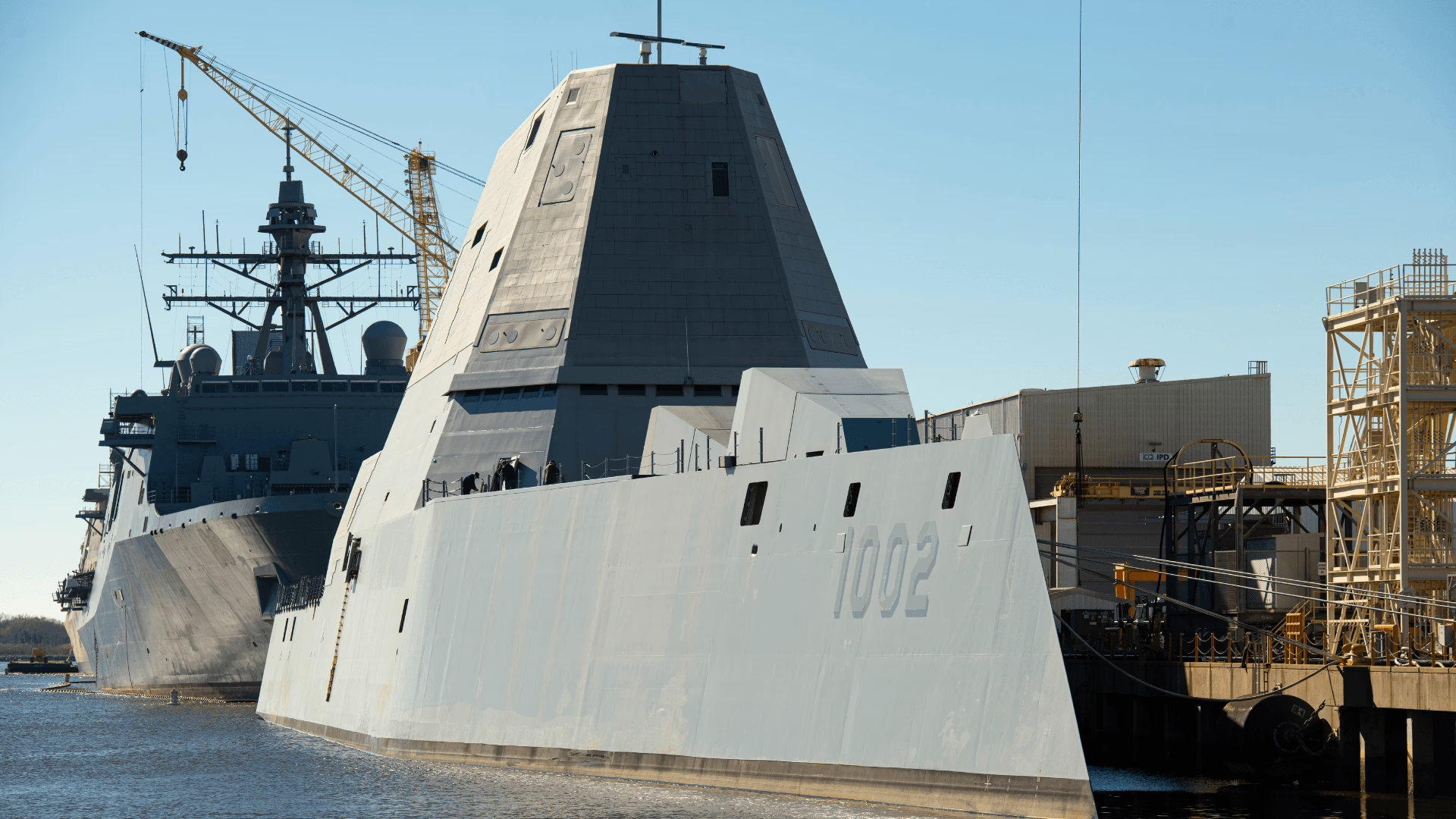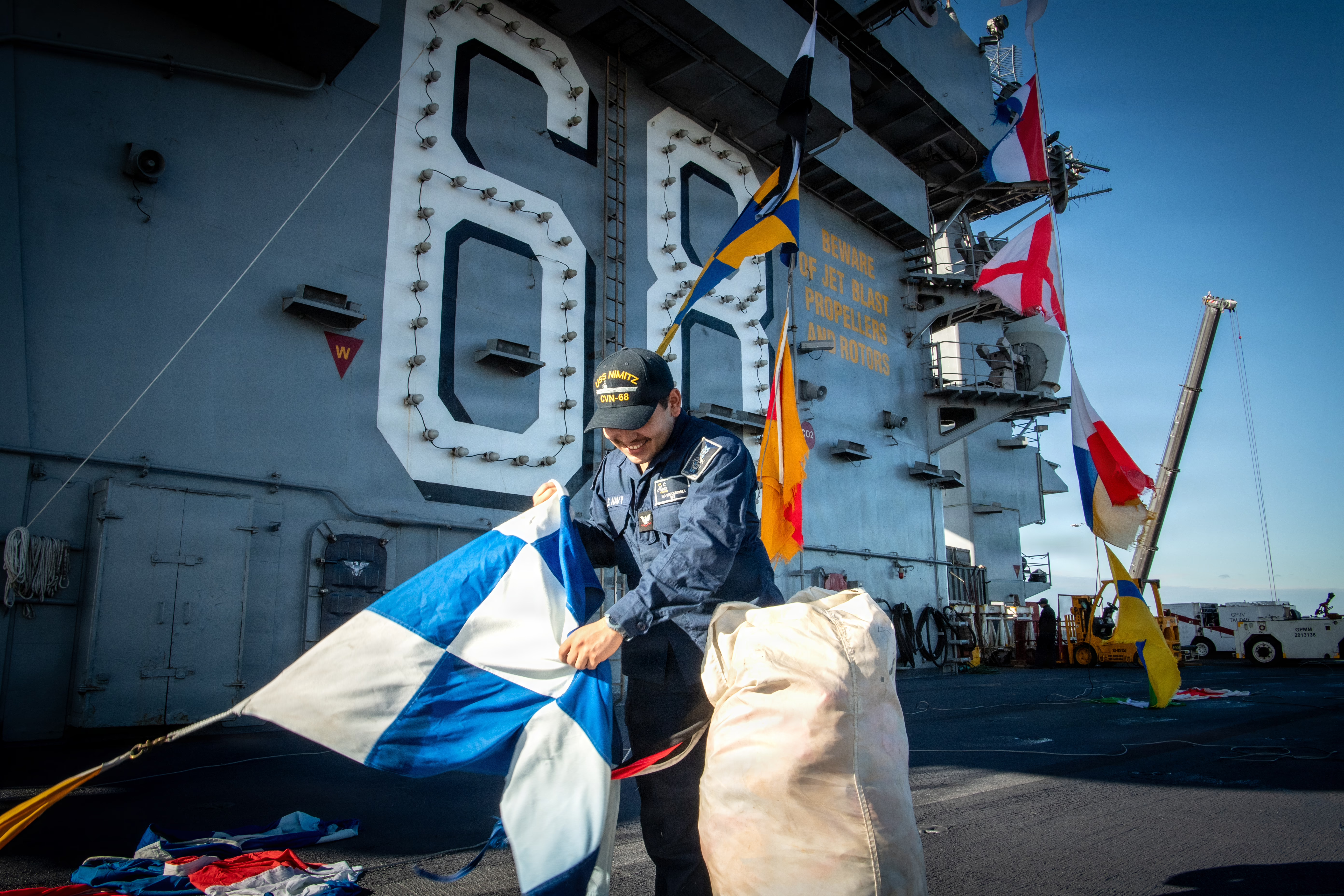
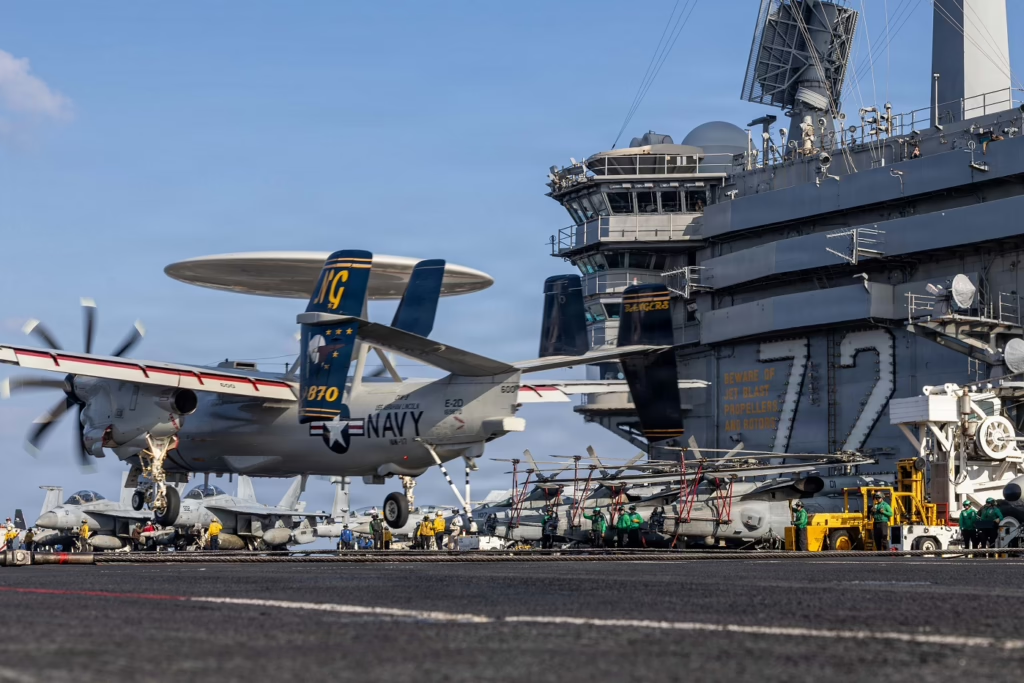

Photo caption: An E-2D Hawkeye, attached to Airborne Command & Control Squadron (VAW) 117, makes an arrested landing on the flight deck of Nimitz-class aircraft carrier USS Abraham Lincoln (CVN 72) in the Arabian Sea, Feb. 12, 2026. Abraham Lincoln is deployed to the U.S. 5th Fleet area of operations to support maritime security and stability in the Middle East. (U.S. Navy photo by Mass Communication Specialist 2nd Class Sonny Escalante)
Feb. 20, 2026
HII’s Weekly News Digest is compiled every Friday by the Corporate Communications team to summarize and highlight news stories of significance to the company.
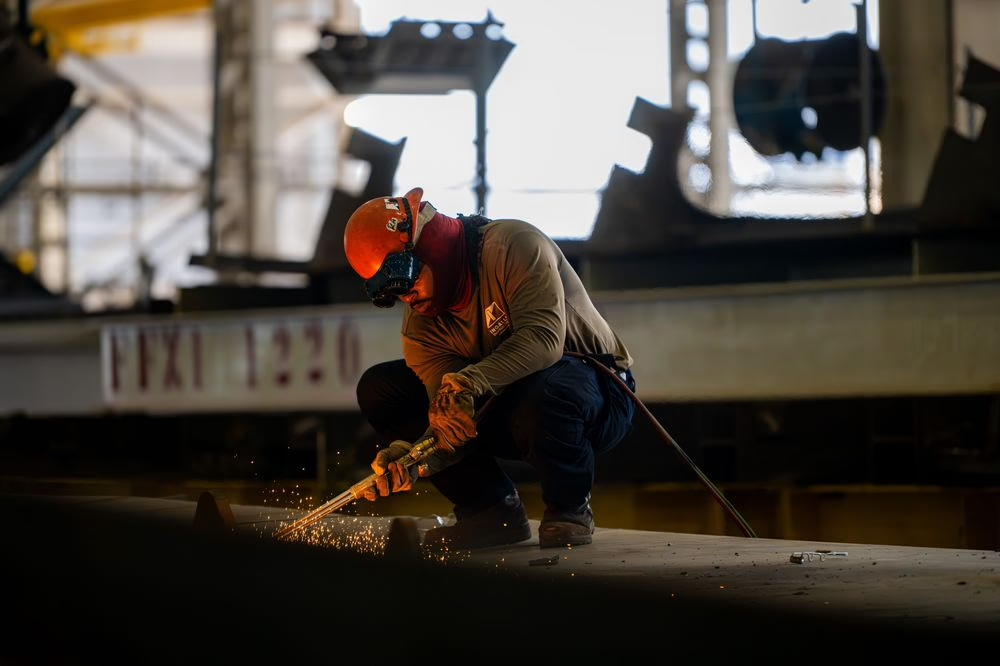
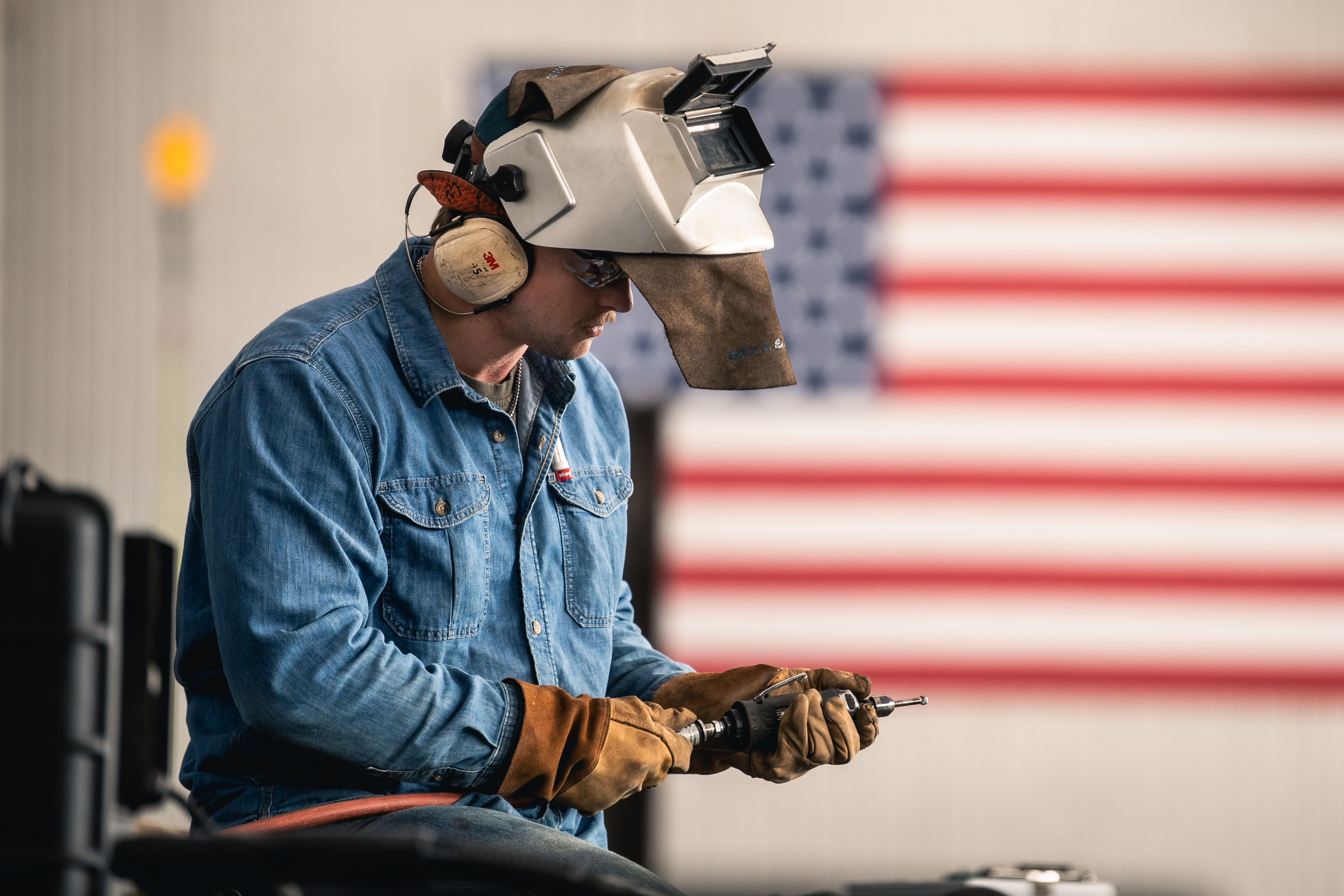
HII, Path Robotics Sign Agreement To Increase Shipbuilding Throughput: Defense Daily reported on Tuesday that HII and Ohio-based Path Robotics have entered into an agreement that will aim to increase throughput at HII’s shipyards. The memorandum of understanding outlines a plan to integrate Path Robotics’ physical artificial intelligence technology into the shipbuilding process. HII has already sent 40,000 pounds of steel to Path Robotics’ Columbus facility. Path is now using non-controlled unclassified information ship design specs to weld the steel together and prove out the process. The main goal for 2026 is to certify Path’s autonomous welding systems to meet U.S. Navy weld standards. HII Executive Vice President of Maritime Systems and Corporate Strategy Eric Chewning said HII will focus on use cases where Path’s technology can increase throughput at Ingalls Shipbuilding. If successful, the technology will then be incorporated at Newport News Shipbuilding. Inside Defense reported on Tuesday that HII will invest internal research and development dollars in ways that utilize technology to increase its shipbuilding throughput by 15% in 2026. The goal, Chewning said, is to use physical AI in a way that means performing 10,000 different tasks a single time to speed up the shipbuilding process.
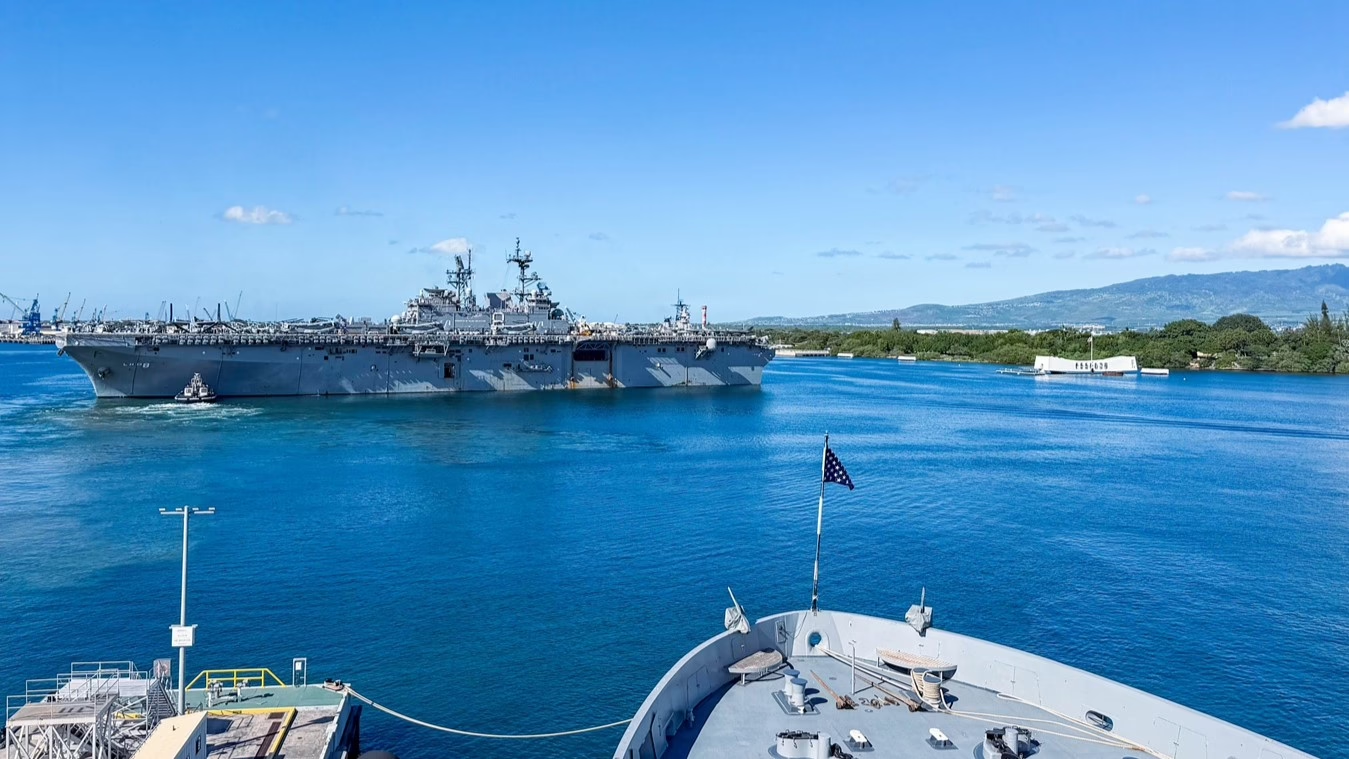
USS Gerald R. Ford (CVN 78) Becomes Second Carrier Currently Deployed In Middle East: The Associated Press reported on Thursday that the USS Gerald R. Ford (CVN 78) Carrier Strike Group is already in the Mediterranean Sea to support U.S. efforts ahead of nuclear discussions with Iran. The Washington Post reported on Friday, Feb. 13, that President Donald Trump extended Ford’s deployment after the ship spent the past several months in the Caribbean Sea. USNI News reported on Sunday that Ford’s deployment is part of a larger U.S. naval buildup in the Middle East, which already includes the USS Abraham Lincoln Carrier Strike Group. Ford will likely be positioned initially near the coast of Israel to defend Tel Aviv and other Israeli cities and towns, defense officials told the New York Times. The Associated Press article notes that the movements of additional American warships and airplanes does not guarantee a U.S. strike on Iran — but they bolster Trump’s ability to carry out one should he choose to do so. The New York Times reported on Wednesday that Ford and its escort ships may not return from deployment until late April or early May, after being originally deployed in June 2025.
Administration Details Strategy To Strengthen Shipbuilding And Maritime Industry: USNI News reported on Friday, Feb. 13 that the Trump administration released a Maritime Action Plan outlining steps to expand U.S. commercial shipbuilding, grow the mariner workforce and increase use of U.S. built and U.S. flagged vessels. The 44-page plan supports an April executive order to overhaul shipbuilding, mariner training and the port system. Officials said fewer than 1% of new commercial ships are built in the United States and only a small share of the nation’s 66 shipyards have new construction capacity. The plan calls for investment in shipyard infrastructure and public yards, along with incentives and public-private partnerships to expand capacity. It also proposes fees on foreign-built vessels entering U.S. ports, regulatory changes to favor domestic production and streamlined procurement and compliance processes. The blueprint includes investments in mariner and shipbuilder training, including upgrades to the U.S. Merchant Marine Academy and expanded pipelines for maritime trades and veterans. The administration said legislation and future budgets will be needed to carry out the plan, with the goal of increasing domestic shipbuilding capacity and reducing reliance on foreign-built and crewed vessels.
| Social Media Highlight Of The Week
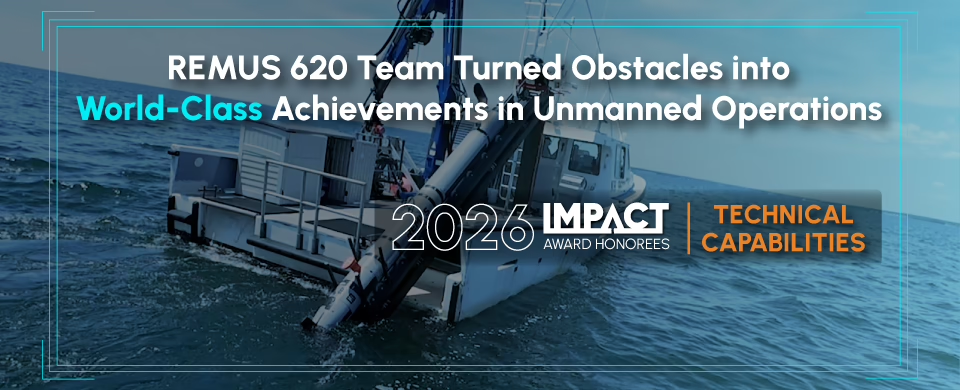
Posted Wednesday on Mission Technologies’ LinkedIn page:
“99.9% operational availability. 935 deployments. 7 years. 2 days of downtime. The Australian Maritime College’s REMUS 100 AUV just completed seven years of operational deployment with only two days of material-related downtime—while training 400+ Royal Australian Navy operators. This is the reliability standard we’re setting for the next 25 years of autonomous maritime operations. #ICYMI | Read the announcement” |
Australia Advances AUKUS Sub Shipyard With $2.7B Investment: Reuters reported on Sunday that Australia will spend $2.7 billion to advance construction of a nuclear submarine shipyard at Osborne in South Australia under the AUKUS partnership with the United States and United Kingdom. The investment supports plans to base U.S. commanded Virginia-class submarines from Australia from 2027, sell several Virginia-class boats to Australia from around 2030 and develop a new AUKUS-class submarine built by the United Kingdom and Australia. Officials said the funding is an initial payment toward a shipyard project estimated to cost about $30 billion over the coming decades. The Osborne yard will be used by Australia’s ASC and the United Kingdom’s BAE Systems to build the new fleet and continue maintenance on Australia’s Collins-class submarines until construction begins later this decade. South Australian officials said the funding will support enabling infrastructure at the site. A recent Pentagon review of AUKUS identified the need for Australia to accelerate its nuclear submarine capacity.
HII’s Weekly News Digest is produced by HII’s Corporate Communications team and posted to Homeport every Friday.
Please note: Social media is blocked on HII computers for most employees. Employees are encouraged to visit HII’s Facebook page and other social media sites on personal time and from non-work devices.
Send feedback to: HII_Communications@hii-co.com.