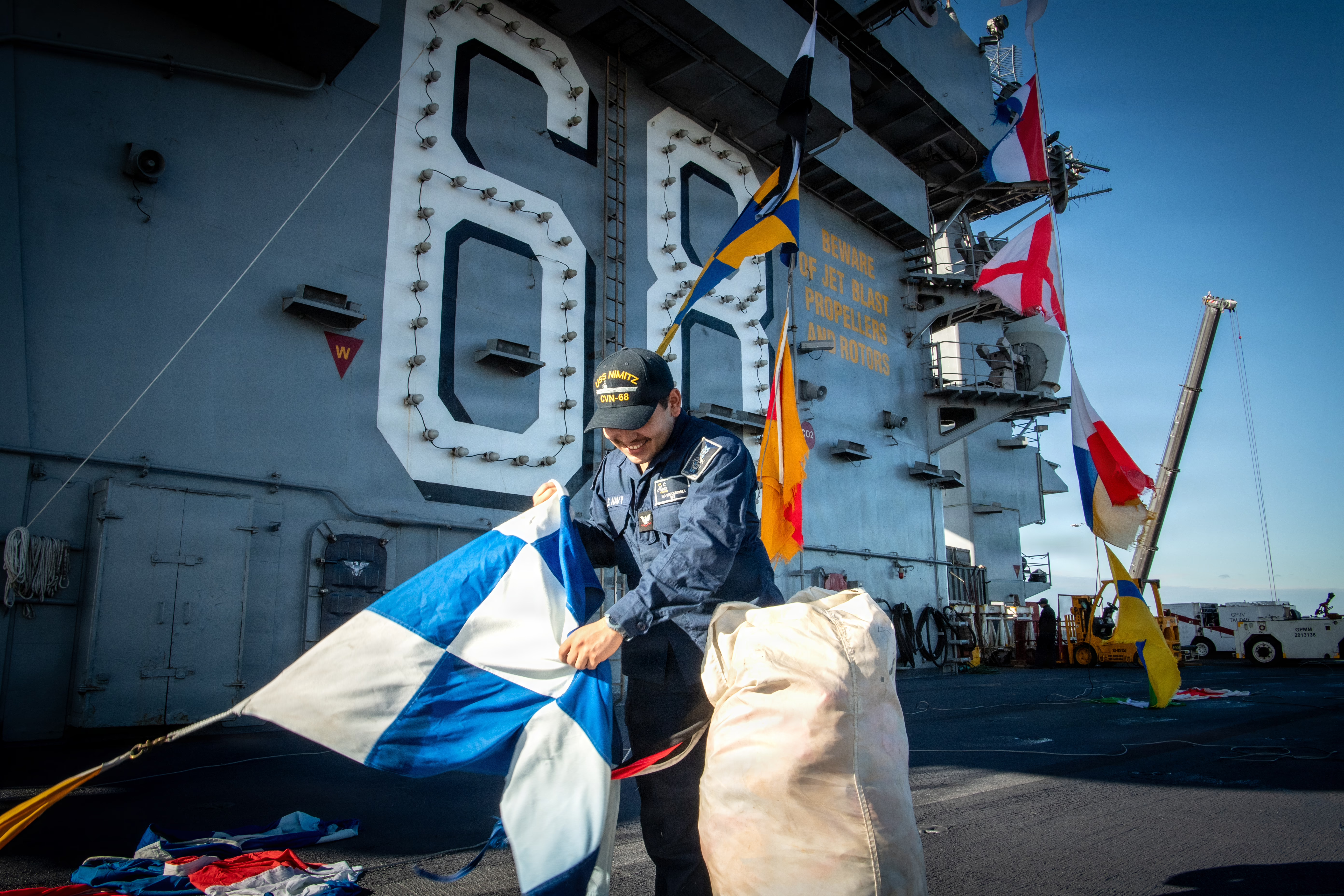
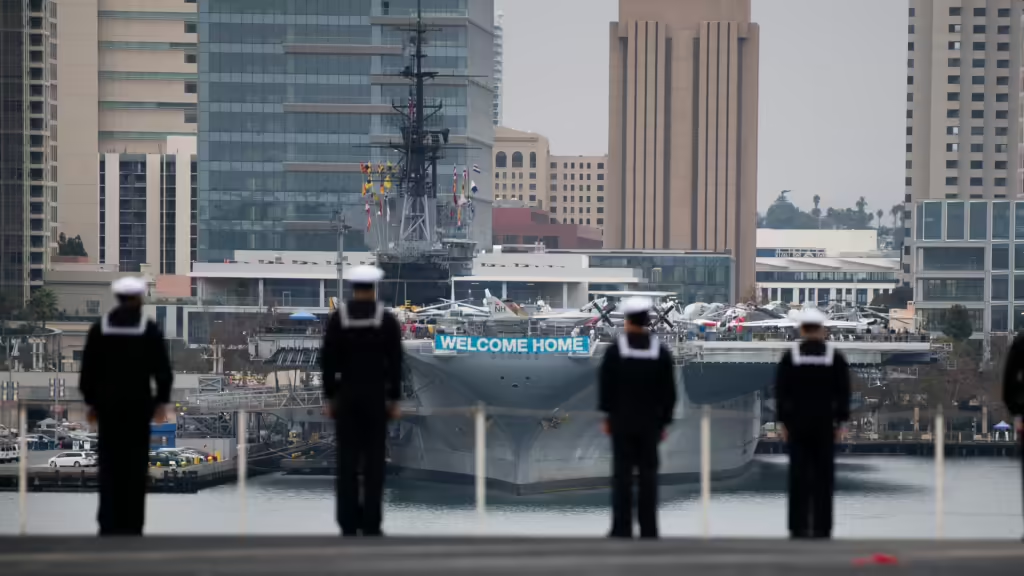

Caption: Sailors man the rails aboard the Nimitz-class aircraft carrier USS Theodore Roosevelt (CVN 71) as it arrives at Naval Base San Diego, Oct. 15, 2024. Theodore Roosevelt, the flagship of the Theodore Roosevelt Carrier Strike Group, returned to its homeport after conducting operations in the U.S. 3rd, 5th, and 7th, Fleet of operations as part of a routine deployment in support of global maritime security operations. (U.S. Navy photo by Mass Communication Specialist 3rd Class Richard Tinker)
Oct. 18, 2024
HII’s Weekly News Digest is compiled every Friday by the Corporate Communications team to summarize and highlight news stories of significance to the company.
Gulf Coast Shipyards Work To Improve Hiring & Retention: USNI News reported on Monday that HII’s Ingalls Shipbuilding division, along with many of its Gulf Coast counterparts, has seen material improvements in worker retention post-pandemic. Ingalls President Kari Wilkinson said shipbuilding can be hard work, but the Pascagoula shipyard is doing everything it can to attract and retain workers. Despite an abundance of contracted work, there’s still an open question in Gulf Coast communities about how many people can work at the shipyards, according to the article. To help combat the issue, Ingalls has built an extensive three- to four-year training and apprenticeship program for the next generation of shipbuilders. The school currently has 600 students enrolled.
Australia Investing $20 Billion In Naval Shipyard Projects: Breaking Defense reported on Wednesday that Australia has launched a $20 billion plan to develop a naval shipyard and dry dock in Western Australia to support the AUKUS submarine program. The new dock at the Henderson shipyard in the south of Perth will house a defense precinct for naval shipbuilding and servicing of AUKUS nuclear-powered submarines, the Australian Broadcasting Corporation reported on Tuesday. The site is near HMAS Stirling where the nuclear-powered attack boats will be based and maintained. The project, which will create up to 10,000 jobs, includes building a new dry dock for nuclear submarine maintenance. Reuters reported on Tuesday that the Australian government will make an initial investment of $85 million over three years to upgrade facilities at the Henderson shipyard, Australian Defence Minister Richard Marles said. The AUKUS defense pact signed in 2021 between Australia, Britain and the U.S. will see Australia buy up to five nuclear-powered submarines from the U.S. in the early 2030s before jointly building and operating a new class, SSN-AUKUS, with Britain, roughly a decade later. Naval News reported on Tuesday that the last dry dock the Australian military built was in Sydney during World War II. The 347-meter-long facility was the largest engineering project in the country at the time.
Navy Reloads Cruiser’s Missiles At Sea For First Time: Defense News reported on Wednesday that the Navy resupplied a warship’s weapons at sea for the first time. Sailors aboard USS Chosin (CG 65) employed the Transferrable Reload At-sea Method device, known as TRAM, to load the ship’s MK 41 Vertical Launching System off the coast of San Diego on Friday. The TRAM prototype allows warships to rearm during the underway replenishment process when supply ships deliver fuel, food and other critical supplies. This ability to reload at sea, rather than at shore, saves time for combatant ships and keeps them in the fight, instead of having to go into port to reload. USNI News reported on Tuesday that the nature of the resupply – moving 22- to 25-foot missile canisters between ships in real sea conditions – adds difficulty and limitations to the more routine, side-by-side underway replenishment that Navy ships have done for decades. The Navy plans to field TRAM on cruisers and destroyers in the next two to three years by installing them during already-scheduled maintenance availabilities.
Boeing Moves To Gain Access To Cash As Strike Continues: The Wall Street Journal reported on Tuesday that Boeing has secured a new credit line and moved to raise at least $10 billion by selling new shares, in hopes of demonstrating that it can weather its current crisis. The company, in a pair of regulatory filings on Tuesday, told investors it could issue up to $25 billion in shares or debt during the next three years while also entering into a new $10 billion credit agreement with lenders. Under the shelf registration, Boeing is expected to pursue a stock offering that raises around $10 billion, according to people familiar with the matter. The manufacturer is taking these steps to access liquidity at a time when it plans to lay off about 10% of its workers in the coming months, about 17,000 people, the Associated Press reported on Friday, Oct. 11. About 33,000 union machinists have been on strike since Sept. 14. CEO Kelly Ortberg told staff in a memo Friday that the job cuts will include executives, managers and employees.
| Social Media Highlight Of The Week
Posted Thursday on HII’s Facebook page: “Check out these photos of the keel of #DDG133 being erected on the future USS Sam Nunn! DDG 133 is currently being built by HII’s #IngallsShipbuilding division.” |
Interest Grows In Small Nuclear Reactors: The Washington Post reported on Wednesday that Amazon is investing in projects to develop small modular nuclear reactors, or SMRs, to meet growing energy demands from artificial intelligence and data centers while honoring pledges to reduce carbon emissions. Amazon is leading a $500 million funding round for X-Energy Reactor, a company that develops small modular nuclear reactors and fuel. It’s also working with utilities in Washington state and Virginia on potential SMR projects. Amazon expects four of these reactors will initially generate 320 megawatts of capacity for Energy Northwest but the project could increase to 960 megawatts, enough to power some 770,000 homes. In Virginia, a small modular reactor near an existing Dominion Energy nuclear power station could generate at least 300 megawatts. The announcement comes just days after Google unveiled a similar plan, Reuters reported on Monday. Google plans to will purchase energy from small modular nuclear reactors developed by Kairos Power. The first Kairos Power SMR is intended to come online by 2030. Amazon and X-Energy want to bring more than 5 gigawatts of power projects online by 2039. Meanwhile, Inside Defense reported on Thursday that the Navy is seeking information about the development of nuclear power sites on underutilized military land, including seven locations of interest across Virginia, Maryland and North Carolina. The Navy is asking for, but not limiting submissions to, information on shore-based nuclear technologies that could be used to create microgrids that ensure better energy stability. Submission to the request for information is due Nov. 7.
HII’s Weekly News Digest is produced by HII’s Corporate Communications team and posted to Homeport every Friday.
Please note: Social media is blocked on HII computers for most employees. Employees are encouraged to visit HII’s Facebook page and other social media sites on personal time and from non-work devices.
Send feedback to: HII_Communications@hii-co.com.