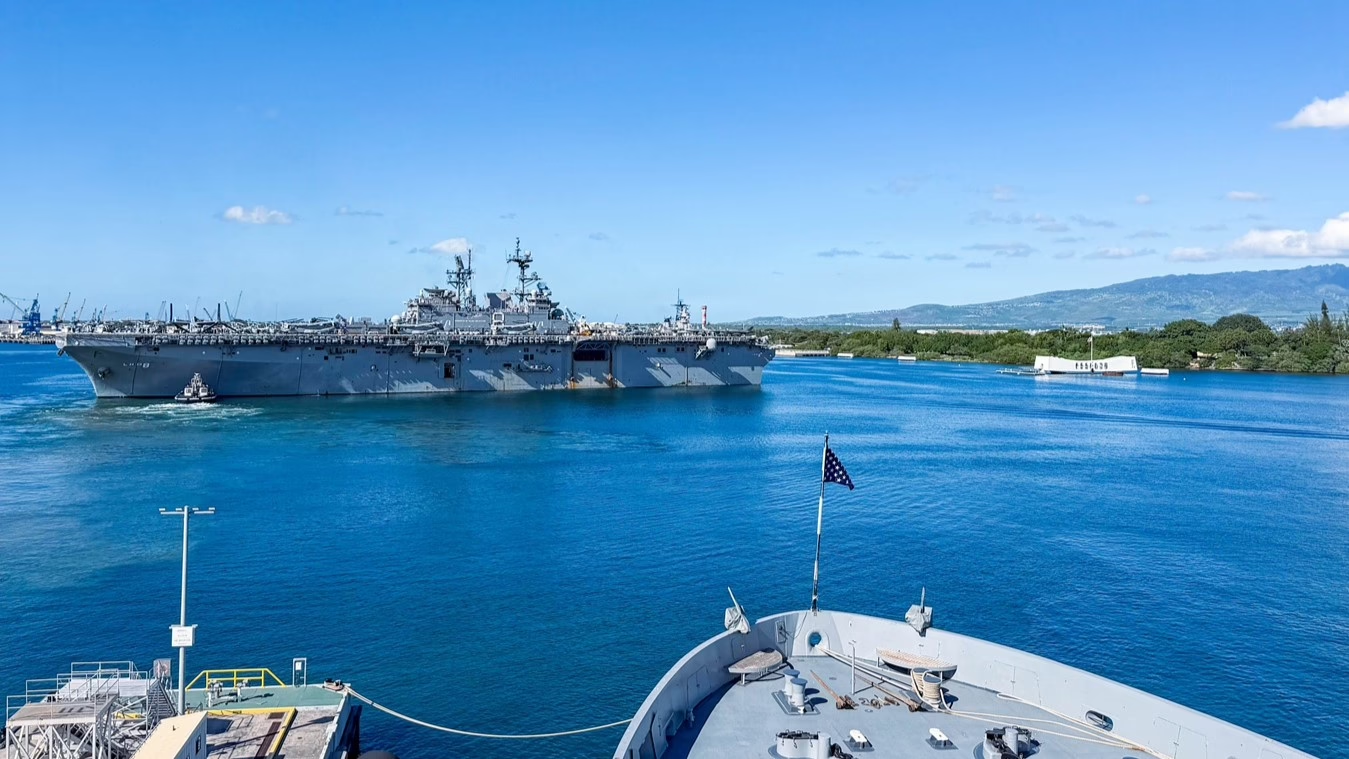
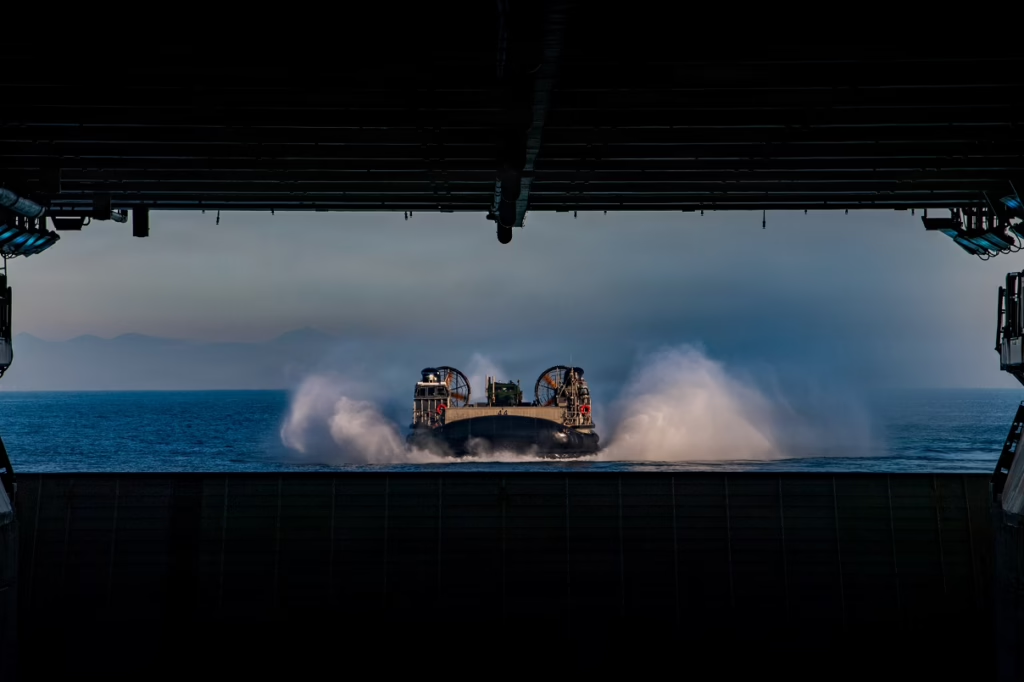

Photo caption: U.S. Navy landing craft, air cushion assigned to Assault Craft Unit 5, approaches the well deck of Wasp-class amphibious assault ship USS Boxer (LHD 4) while conducting launch and recovery operations, Feb. 23, 2026. Boxer, flagship of the Boxer Amphibious Ready Group, was built by HII’s Ingalls Shipbuilding division and commissioned by the U.S. Navy in 1995. (U.S. Navy photo by Mass Communication Specialist Seaman Apprentice Sailor O’Rear)
Feb. 27, 2026
HII’s Weekly News Digest is compiled every Friday by the Corporate Communications team to summarize and highlight news stories of significance to the company.
Lawmakers Urge Navy To Award Submarine Contracts: The Wall Street Journal reported on Wednesday that congressional lawmakers are urging the U.S. Navy to award roughly $100 billion in contracts that have been earmarked for submarine construction. Congress approved the construction of up to 13 Virginia-class attack submarines in 2023 and five Columbia-class ballistic-missile submarines in 2025. However, the U.S. Navy has not yet signed those contracts with HII and General Dynamics, despite expectations that orders for 10 of the Virginia-class vessels would be signed as early as 2024. Rep. Rob Wittman, a Virginia Republican who is vice chairman of the House Armed Services Committee, and Democrat Rep. Joe Courtney, from Connecticut, said a block buy of those submarines will signal to contractors and thousands of companies within the submarine supply chain that the Navy is serious about speeding up production and securing the industrial base. HII CEO Chris Kastner addressed the issue during the company’s most recent quarterly earnings call. “We think that needs to get done by the end of the first half of the year,” Kastner said. “We need to make sure that we don’t incur risk related to a delayed start on that program.”
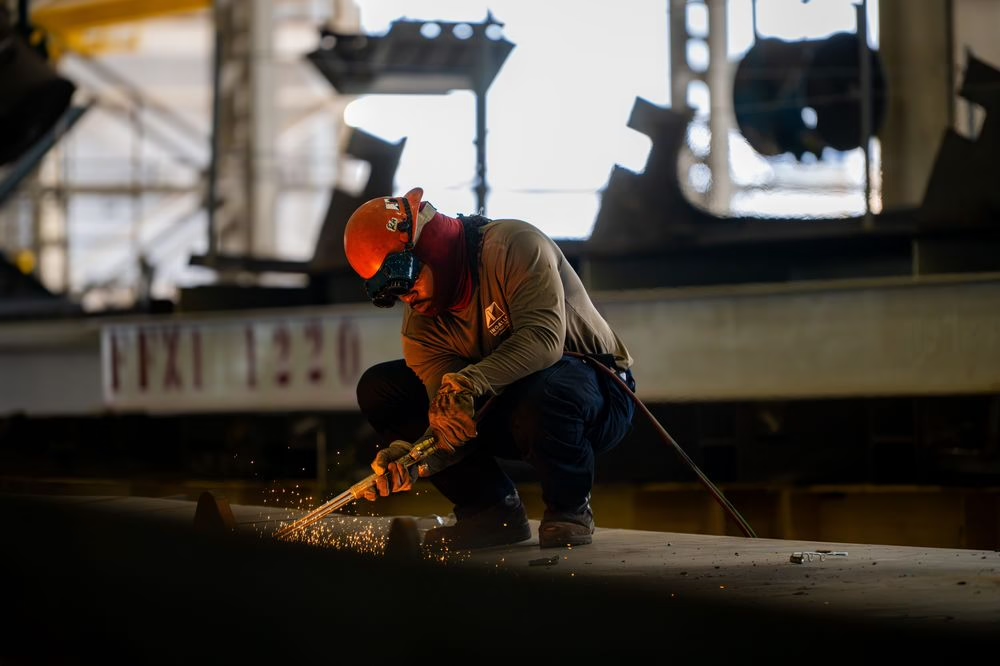
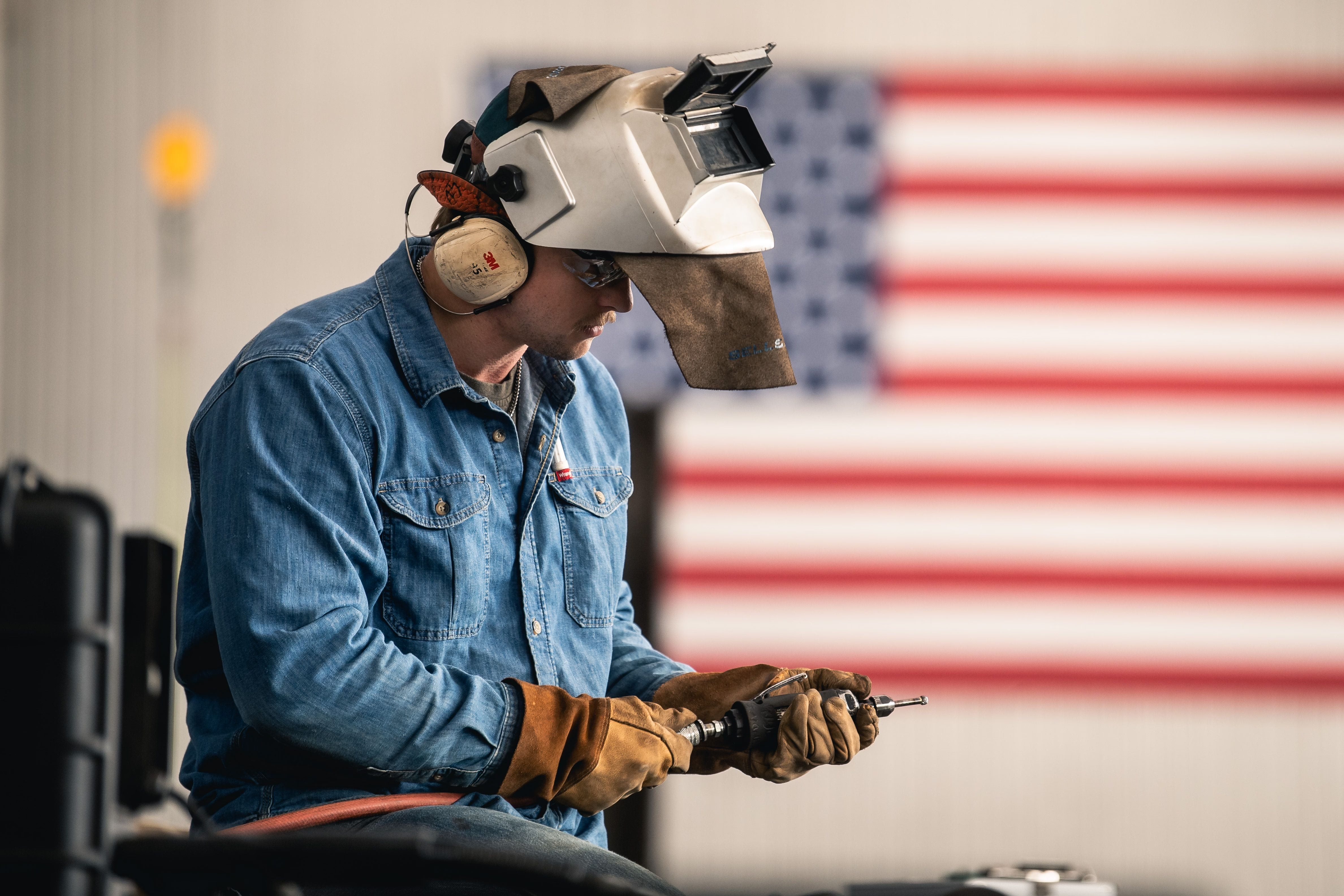
Unions Representing Ingalls Employees Approve New Contracts: WLOX reported on Tuesday that members of the Pascagoula Metal Trades Council voted 1,832-391 to approve a new collective bargaining agreement with HII’s Ingalls Shipbuilding division. Magnolia Tribune reported on Wednesday that the trades council includes nine of the 13 unions at Ingalls and represents close to 6,000 workers. This is the first time Ingalls and the trades council have engaged in full negotiations in nearly 20 years. The contract includes an immediate 18% base pay raise, an additional 3% yearly raise through 2029, and a 5% raise in 2030. The agreement also includes an additional pay increase of up to 10% for workers in what the company designates as “critical crafts.” The United Federation of Special Police and Security Officers also voted in favor of the new agreement Tuesday. Other union groups are scheduled to vote on the proposal later this week and next week.
Pentagon To Use Reconciliation Funds For Shipbuilding Surge In Fiscal Year 2026: Inside Defense reported on Monday that the Pentagon intends to obligate more than $150 billion in fiscal year 2026 under the reconciliation package enacted last year. The funds will be used to accelerate shipbuilding, missile defense and munitions production. The spending blueprint implements the full $152.3 billion provided to the Defense Department under the One Big Beautiful Bill Act, plus $1 billion in Defense Production Act funding, bringing the total allocation to $153.3 billion. While the funds remain available through fiscal year 2029, nearly the entire amount — $151.5 billion — is programmed for fiscal year 2026 execution. Breaking Defense reported on Monday that the front-loaded procurement push is focused on shipbuilding, with $29.2 billion allocated for: a second Virginia-class submarine in FY 26; two additional DDG 51 destroyers; three T-AO oilers; amphibious warships under a multiship block buy; and expanded unmanned surface and undersea vessel production. Billions are also directed toward supplier expansion, additive manufacturing, workforce development and dry dock modernization. Awards for several shipbuilding industrial base initiatives are projected as early as the second quarter of fiscal year 2026. Another $25 billion is tied to the Golden Dome for America missile defense program and more than $25 billion is earmarked for munitions stockpiles and production.
Australia Advances AUKUS Reactor Build, Expands UK Defense Collaboration: The Age reported on Tuesday that Australia has approved about $310 million to purchase the first reactor components for its future SSN-AUKUS submarines, marking an early step in building the new nuclear-powered fleet. The parts will be produced by Rolls-Royce in the U.K. and installed in submarines to be built in Adelaide later this decade, with the first boats expected in the early 2040s. The investment builds on broader AUKUS commitments, including planned shipyard expansion in South Australia and the interim transfer of U.S. Virginia-class submarines to Australia. Officials said the program will strengthen Australia’s defense industrial base and long-term submarine capability. The U.K. and Australia also agreed to expand cooperation on related defense technologies, including radar and drones.
| Social Media Highlight Of The Week
Posted Tuesday on Mission Technologies’ LinkedIn page: “In June 2025, you helped us name our sponsored service dog through Mutts With A Mission, and the winning name was Gizmo! Stay tuned for updates as Gizmo begins his journey as a service dog in training, preparing to serve those who serve us. 🐾 #MuttsWithAMission #ServiceDogs #TeamHII #VeteransSupport” |

China’s New SSN Emerges As Submarine Build Rate Accelerates: Defense News reported on Tuesday that satellite imagery has revealed a new Chinese nuclear-powered attack submarine under construction at Bohai Shipyard, highlighting Beijing’s accelerating submarine production and modernization. The new platform, known as Type 09V or Type 095, could launch within a year and enter service later this decade following trials. Analysts assess China is now producing roughly three nuclear attack submarines annually, more than double the U.S. build rate, while also continuing to expand its ballistic missile submarine fleet. The new design appears larger than previous classes and may incorporate advanced features such as vertical launch cells, improved maneuvering controls and a pumpjet propulsor. China’s shipyard infrastructure could support simultaneous construction of up to 20 SSN-sized hulls, underscoring significant industrial capacity growth. While the U.S. Navy maintains an edge in submarine technology and anti-submarine warfare, the Type 09V reflects China’s sustained effort to close capability gaps. The class could also be paired with new hypersonic anti-ship missiles, further enhancing its strike potential.
HII’s Weekly News Digest is produced by HII’s Corporate Communications team and posted to Homeport every Friday.
Please note: Social media is blocked on HII computers for most employees. Employees are encouraged to visit HII’s Facebook page and other social media sites on personal time and from non-work devices.
Send feedback to: HII_Communications@hii-co.com.