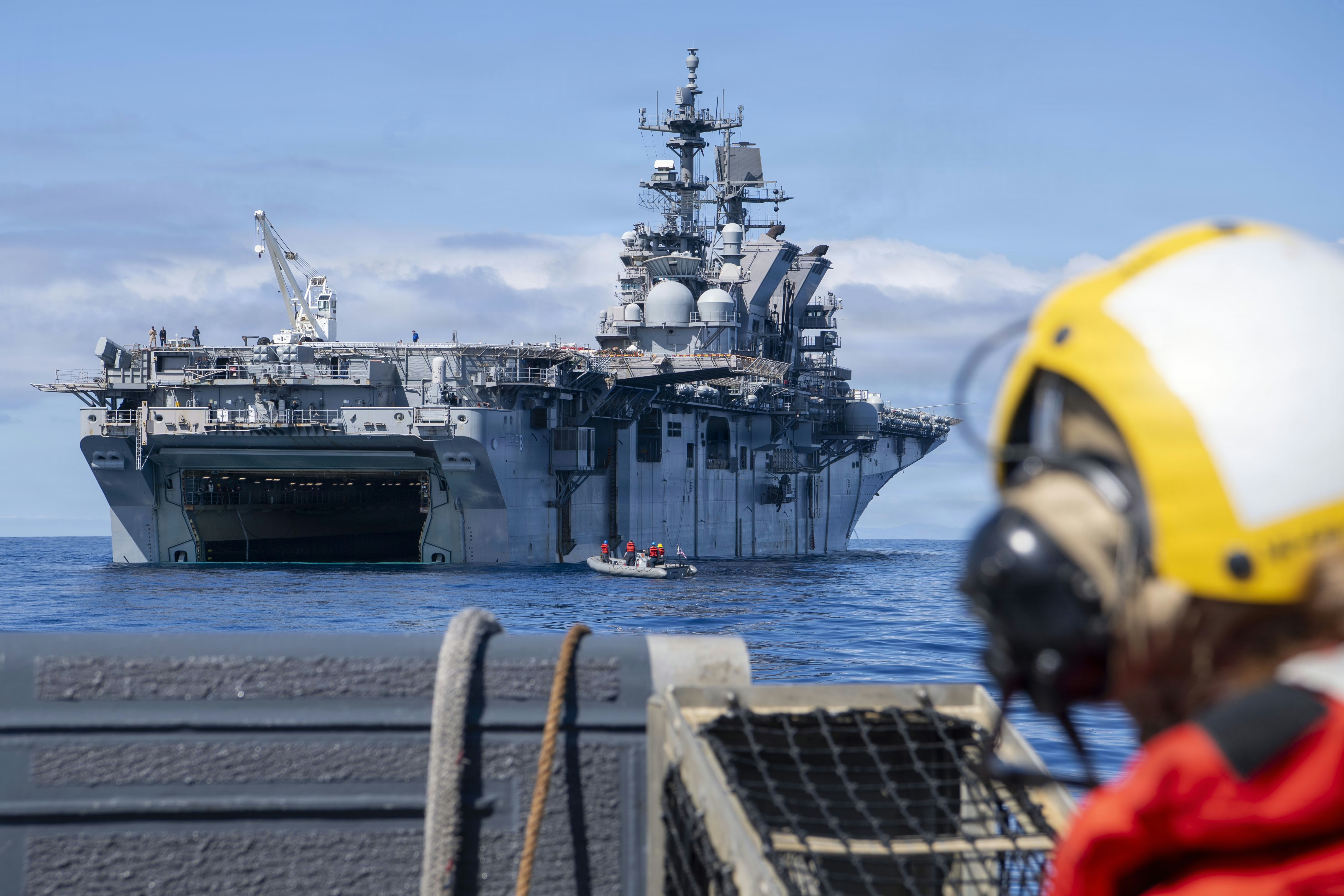


Photo caption: PHILIPPINE SEA (Aug. 10, 2025) U.S. Marine Corps CH-53E Super Stallions assigned to Medium Tiltrotor Squadron (VMM) 265 (Rein.), 31st Marine Expeditionary Unit, prepare to take off from the flight deck of the forward-deployed amphibious assault ship USS America (LHA 6), while conducting flight operations. USS America was built by HII’s Ingalls Shipbuilding division and delivered to the U.S. Navy in 2014. (U.S. Navy photo by Mass Communication Specialist Seaman Nicholas Douglass)
Sept. 12, 2025
HII’s Weekly News Digest is compiled every Friday by the Corporate Communications team to summarize and highlight news stories of significance to the company.
HII Launches ROMULUS Family Of USVs To Boost Unmanned Capabilities: Breaking Defense reported on Tuesday that HII will build a new family of unmanned surface vessels, known as ROMULUS. ROMULUS 190 is based on an offshore crew support boat and modified to operate autonomously. The vessels will utilize HII’s Odyssey autonomous command-and-control software. The Defense Post reported on Friday that ROMULUS 190 is expected to top 25 knots, sail over 2,500 nautical miles, and carry four 40-foot shipping containers. The first will be completed in about 12 months. Once production has ramped up, HII has capacity to build as many as six vessels at once and deliver four to five per year. ROMULUS is under development in conjunction with Beier Integrated Systems, a Louisiana-based marine engineering firm; as well as commercial shipbuilding firms Breaux Brothers and Incat Crowther, both of which also have facilities in Louisiana.
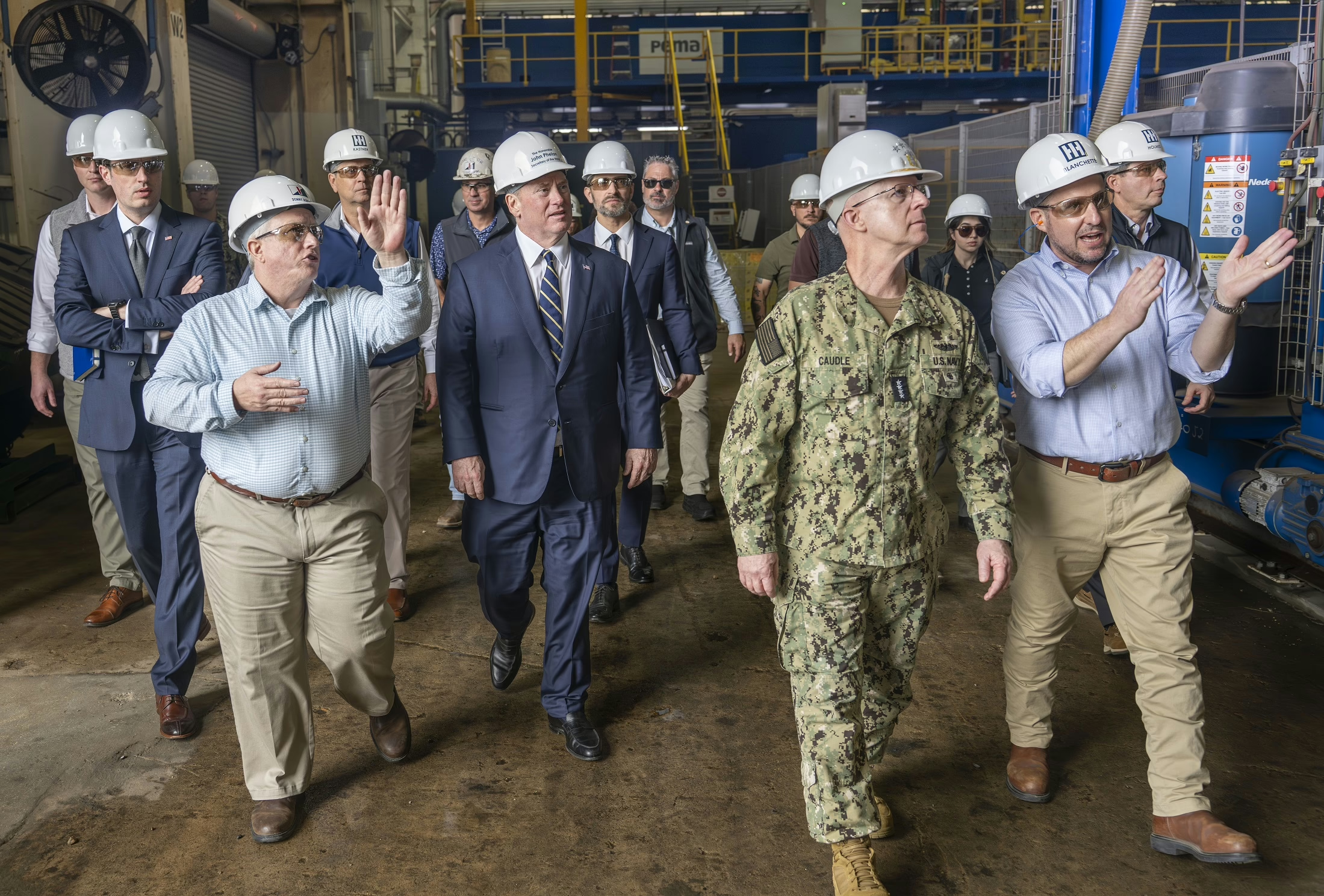
HII Uses AI, Distributed Shipbuilding To Increase Throughput: Defense One reported on Tuesday that HII plans to direct employees at its Newport News Shipbuilding division by artificial intelligence systems within the next year to speed construction of nuclear-powered submarines. By the end of 2026, workers across the shipyard’s 17 shops are expected to take assignments generated by C3 AI software, part of a deal aimed to boosting output by 20%. The system will help manage more than 5,200 weekly jobs and spot chokepoints in submarine production, including shortages tied to just 17 critical parts. Meanwhile, Inside Defense reported Thursday that HII is developing a more distributed shipbuilding model by scaling up its outsourcing work to increase throughput. HII’s Ingalls Shipbuilding division has tapped six partner companies to build outfitted structural units for Flight III Arleigh Burke-class destroyers. HII has expanded its structural assembly network to 23 partner companies to date between Ingalls and its Newport News Shipbuilding division.
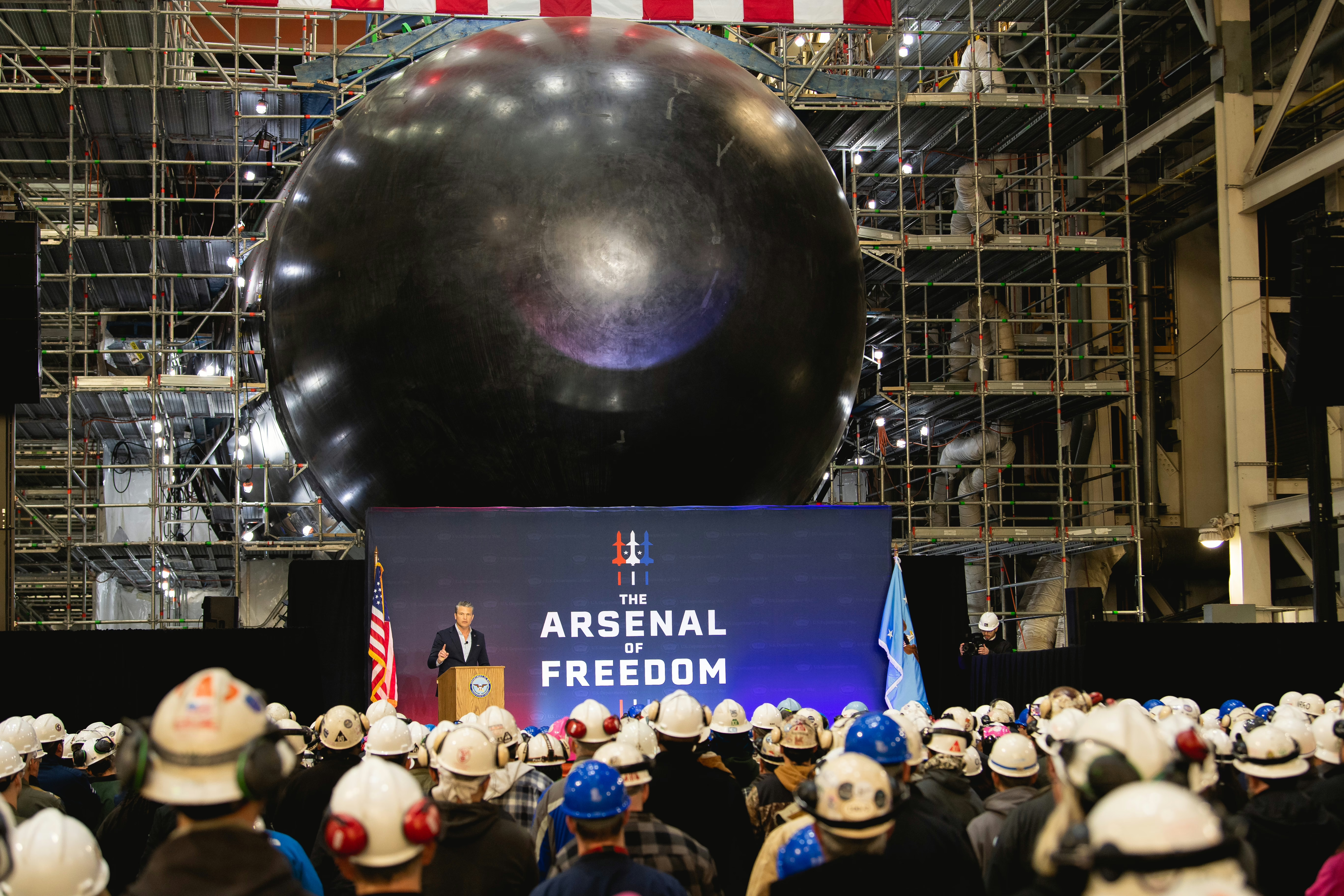
White House Seeks Submarine Stopgap Funding: Inside Defense reported on Wednesday that the Trump administration is seeking $3.9 billion to begin building an additional Columbia-class submarine in the likely event Congress is forced to pass a stopgap continuing resolution to avert a government shutdown on Oct. 1, according to a list of “anomalies” sent to Capitol Hill. Additionally, the administration wants the continuing resolution that would run through Jan. 31, 2026 to grant the Navy the authority to sign a contract to procure five more Columbia submarines, subject to annual appropriations. The White House is forgoing a request to fund the Virginia-class submarine during the CR, instead seeking only the authority to pay its share of cost overruns on boats that have already been purchased. Meanwhile, Politico reported Wednesday that The House narrowly passed its major Pentagon policy bill after Republicans attached provisions that will likely not pass the Senate. The bill authorizes $848 billion for defense but does not obligate spending, and it largely sticks to the amounts laid out in the Pentagon’s budget request. The upper chamber is considering its own bipartisan defense bill, which could pass in the coming days.
HII Announces Partnerships At DSEI: Breaking Defense reported on Wednesday that HII and defense tech firm Shield AI have agreed to partner to advance one another’s autonomy command and control solutions for aerial, surface and subsurface drones. The announcement came during the DSEI trade show held in London and is among several partnerships unveiled by HII this week. The new partnership focuses on HII’s Odyssey software suite and Shield AI’s Hivemind mission autonomy software. The aim is for the companies to use each other’s expertise to improve their respective software’s ability to operate across domains. Naval Today also reported Wednesday that Thales and HII have completed integration and field exercise of the Thales SAMDIS 600 sonar with HII’s next-generation REMUS 620 medium unmanned underwater vehicle. Working together, they provide advanced autonomous mine detection, classification, and imaging to enhance undersea security, mine countermeasures, and subsea infrastructure monitoring for naval forces worldwide.
| Social Media Highlight Of The Week
Posted Wednesday on HII’s Facebook page:
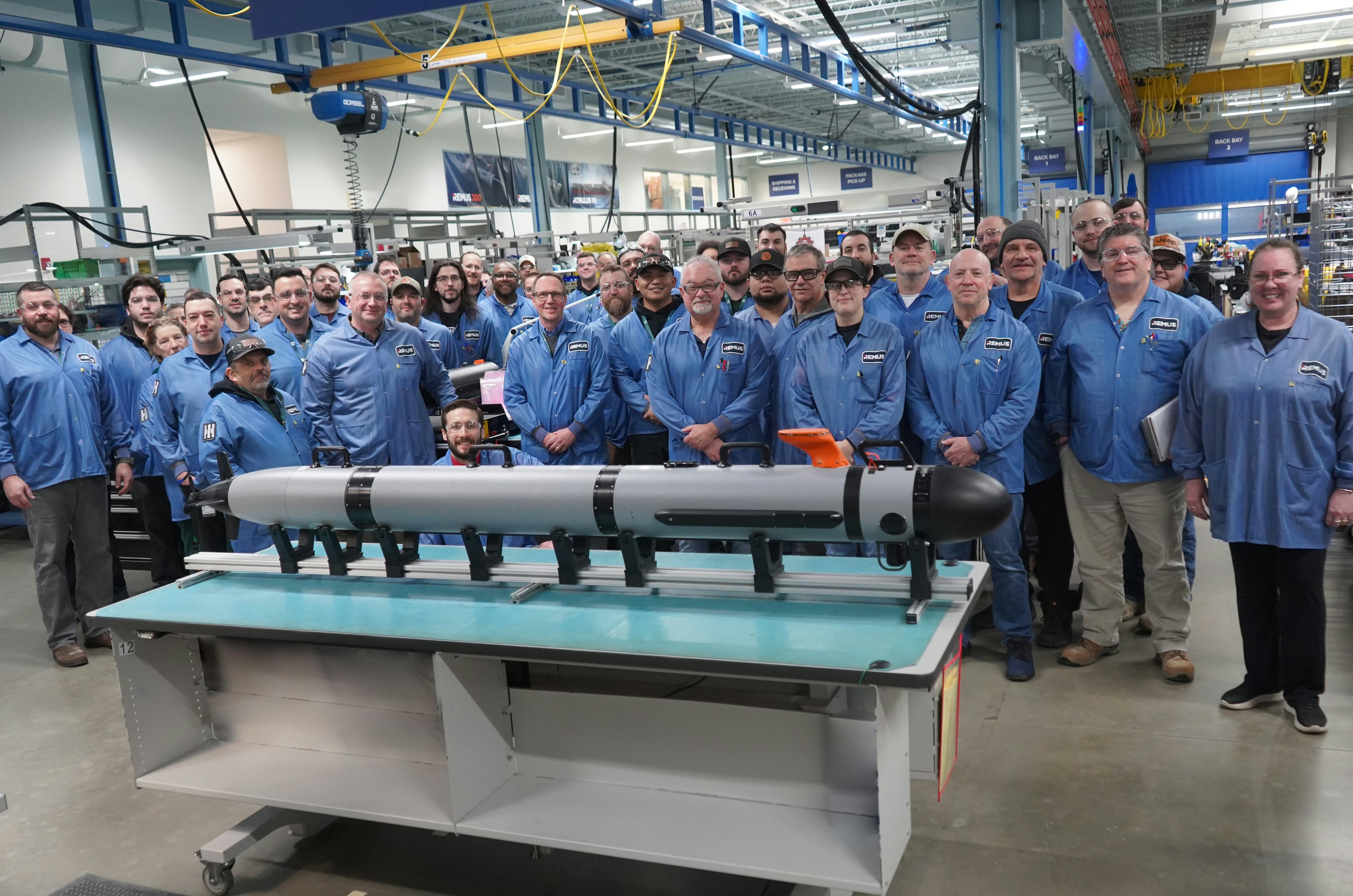
“More great news out of #DSEIUK2025: Today, HII announced the completion of production of the 750th REMUS unmanned undersea vehicle (UUV) for a customer. The German navy will receive the 750th REMUS, a REMUS 300, produced at the HII unmanned facility in Pocasset, Massachusetts. This marks the continued global adoption of REMUS systems to support national security and maritime operations. Congratulations, team! Read more in HII’s Newsroom. |

#HIIatDSEI
Rheinmetall Continues Expansion Into European, American Markets: Breaking Defense reported on Thursday that Germany’s Rheinmetall is on the brink of acquiring Naval Vessels Luerssen as it looks to break into the naval domain and take advantage of lucrative domestic and European market opportunities. Rheinmetall CEO Armin Papperger cited the need for Berlin to replace 30-year-old frigates and corvettes, near term, and the expanding European defense market as reasons behind the purchase. Laying out the business case for buying NVL, he said the shipbuilder has a “good order book.” Rheinmetall will focus on ship-based integration of an array of “missile technologies, launching technologies, simulation (and) electronic warfare” capabilities. Bloomberg reported on Tuesday that Papperger is vying to create a “one-stop-shop” for European defense. The transformation comes as Rheinmetall also expands its American headquarters. Inside Defense reported on Thursday that American Rheinmetall is pouring $32 million into its Michigan manufacturing base to merge work being done at two facilities into a new 168,000-square-foot headquarters in Auburn Hill, Michigan. The company wants to boost its defense work in the United States, including its ongoing competition with General Dynamics Land Systems for the Army’s XM30 program, the combat vehicle designed to replace the Bradley. Rheinmetall’s U.S.-based companies span across Arkansas, Maine, Michigan, Ohio and Virginia.
HII’s Weekly News Digest is produced by HII’s Corporate Communications team and posted to Homeport every Friday.
Please note: Social media is blocked on HII computers for most employees. Employees are encouraged to visit HII’s Facebook page and other social media sites on personal time and from non-work devices.
Send feedback to: HII_Communications@hii-co.com.