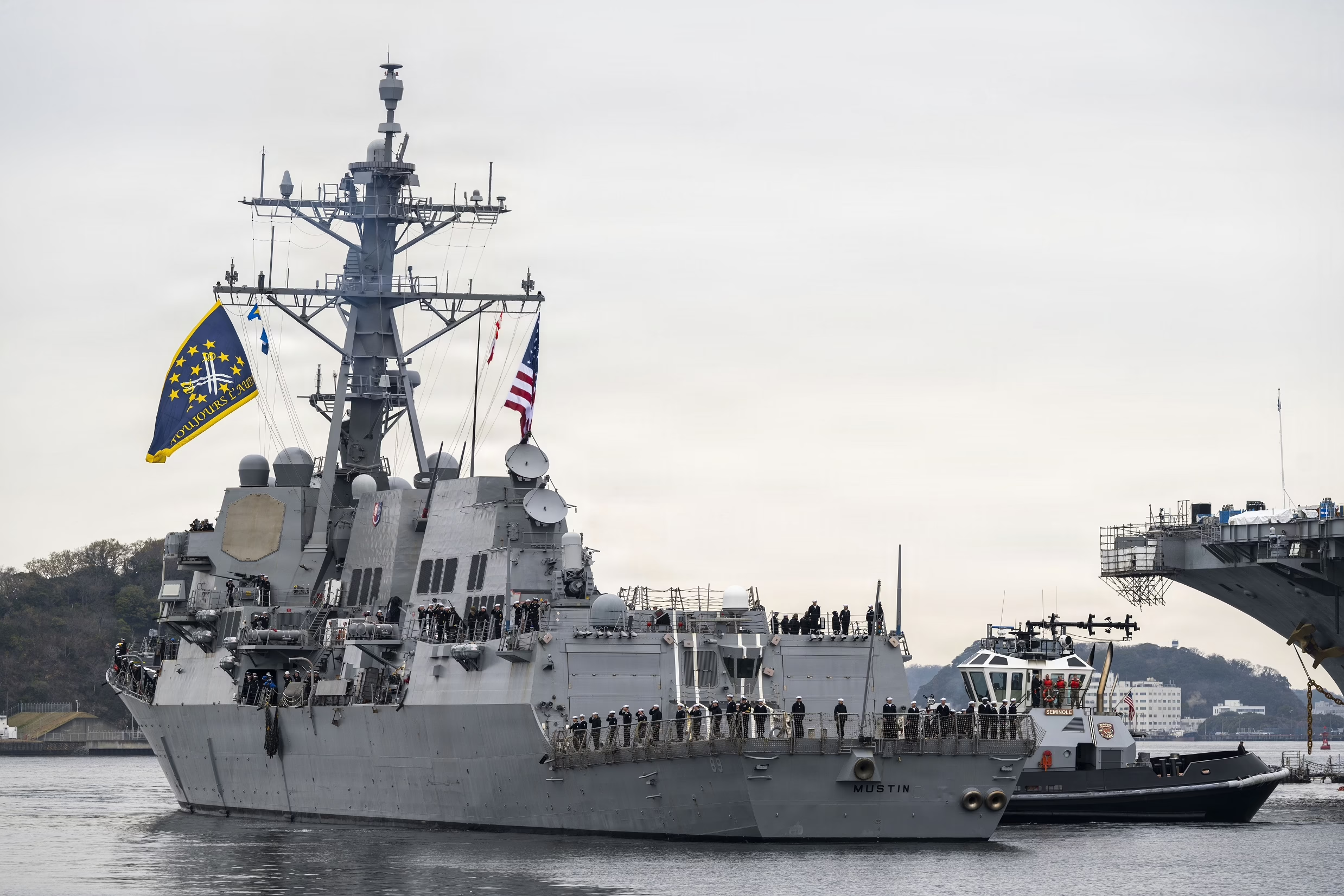
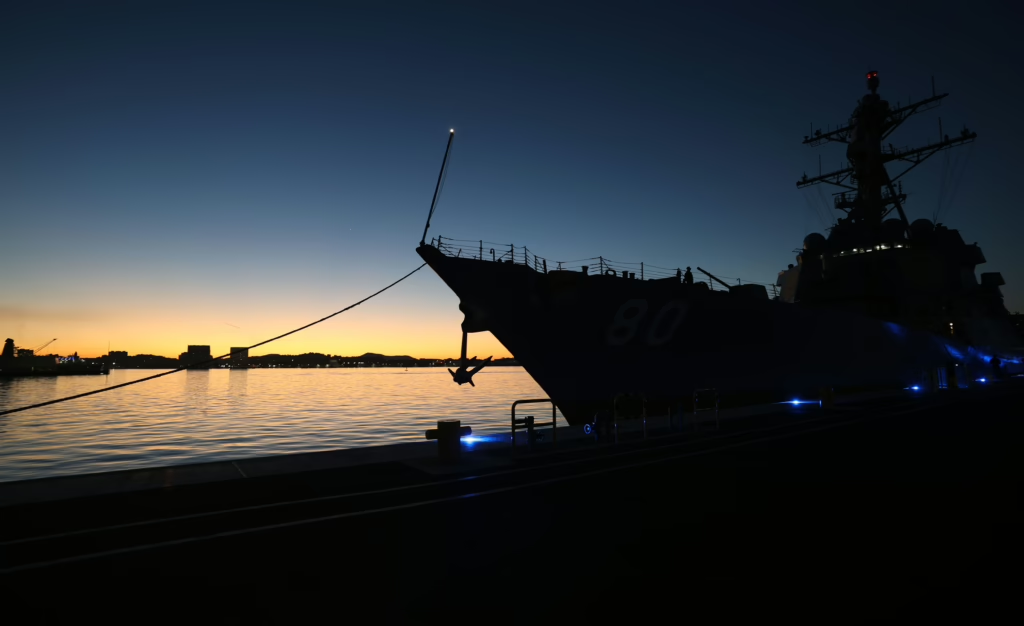

Photo caption: TOULON NAVAL BASE, France (Oct. 11, 2025) The Arleigh Burke-class guided-missile destroyer USS Roosevelt (DDG 80) prepares to depart Toulon Naval Base, France, Oct. 11, 2025. Roosevelt was built by HII’s Ingalls Shipbuilding division and delivered to the U.S. Navy in 2000. (U.S. Navy photo by Mass Communication Specialist 1st Class Indra Beaufort)
Oct. 17, 2025
HII’s Weekly News Digest is compiled every Friday by the Corporate Communications team to summarize and highlight news stories of significance to the company.
The Virginia Class Is Now the Backbone Of The Undersea Fleet: Stars and Stripes reported on Friday, Oct. 10, that the U.S. Navy marked a strategic milestone this year with the commissioning of Virginia-class submarine USS Iowa (SSN 797) and the decommissioning of Los Angeles-class submarine Helena (SSN 725). Virginia-class submarines have now surpassed the aging Los Angeles class in fleet numbers. USS Iowa is the 24th Virginia-class sub to enter service, while the decommissioning of Helena in July leaves 23 Los Angeles-class boats remaining. Described as “the quietest submarine we’ve ever had,” the Virginia class is faster, stealthier, and more versatile, with advanced sonar and Tomahawk missile capabilities. Its growing presence in the Indo-Pacific, including recent deployments to Guam and Hawaii, reflects a shift toward countering China as a “peer adversary.” Bloomberg reported on Tuesday that the race to build submarines in the U.S. is on. Annual hiring in the submarine industrial base increased by 200% between 2021 and 2024, according to the Navy, putting it on track to hire more than 14,000 new workers annually. The submarine industrial base aims to attract 140,000 workers during the next decade to meet growing demands.
Hypersonic-Armed Destroyers And Submarines Relocating To Hawaii: Naval News reported on Saturday that Joint Base Pearl Harbor-Hickam is undergoing major upgrades to support the Navy’s hypersonic-equipped Zumwalt-class destroyers and Virginia-class submarines, positioning Hawaii as a strategic hub for Indo-Pacific operations. By mid-2028, three Zumwalt-class destroyers and as many as three Virginia Payload Module-equipped subs will homeport there, bringing advanced strike capabilities closer to potential conflict zones. The Naval Facilities Engineering and Expeditionary Warfare Center is modernizing berths and dry docks at the base to meet power and maintenance needs, while NAVSEA is seeking contractors to support sustainment and logistics. The destroyers will carry 36 conventional prompt strike hypersonic missiles and receive new intelligence and air defense systems. Submarines will add as many as 12 hypersonic missiles. The base’s Dry Dock 3 and a new Dry Dock 5 will enable depot-level work on all Virginia-class variants and future SSN(X) subs. With five hypersonic-armed vessels based in Hawaii by 2030, the Navy will reduce response times in the Indo-Pacific by days, enhancing readiness and survivability in potential high-end conflicts.
Marine Corps To Utilize Vessel Construction Manager: Inside Defense reported on Friday, Oct. 10, that TOTE Services is vying to fill the role of vessel construction manager for the Marine Corps’ upcoming landing ship medium program. TOTE Services now oversees production of the U.S. Maritime Administration’s five-ship, $1.6 billion national security multi-mission vessel program, which is being built at Hanwha’s Philly Shipyard. It is the first government program to utilize a construction manager. In the role, TOTE Services manages program requirements and oversees day-to-day construction at Philly Shipyard. The shipyard christened the third national security multi-mission vessel in August. The Navy, which has already selected Bollinger to build a single “Block I” landing ship medium, published a request for information in August seeking construction manager candidates capable of negotiating pricing, awarding construction contracts, monitoring shipyard performance and managing risk for the program. A key responsibility of the construction manager is ensuring design stability for the vessel and, when necessary, facilitating smooth and rapid design changes. The Navy’s new approach could set a precedent for military shipbuilding where design stability has been a key contributor to delays in the Constellation-class frigate program.
| Social Media Highlight Of The Week
Posted Thursday on HII’s LinkedIn page: “Making a difference starts with an idea. At HII, we turn those ideas into reality. Shipbuilders at Newport News Shipbuilding, A Division of HII, are designing and building nuclear-powered submarines for the US Navy. If you want to become part of something bigger than yourself, this is the job for you. Take the first step in building your career by applying at HII.com/careers today. #BuildIt” |
Navy’s Final Littoral Combat Ship En Route to Commissioning: Al.com reported on Friday, Oct. 10, that the last littoral combat ship built at Austal USA’s Alabama shipyard has departed for open water, marking the end of a major production chapter for the company and the city of Mobile, and a shift in priorities for the U.S. Navy. The ship, Pierre (LCS 38), will be commissioned on Nov. 15 in Panama City, Florida, and homeported in San Diego. Austal delivered 19 Independence-class ships through the past 17 years. Task and Purpose reported in September that the Navy has had a tumultuous history with littoral combat ships. At one time, both the Freedom– and Independence-class littoral combat ships were plagued by cost overruns, operational mispositioning and early retirements. More recently, the ships have found their place in the fleet. Several of the ships are now operating out of Bahrain with a full suite of mine countermeasure gear where they have replaced the Avenger-class countermeasure ships. The end of the production line has necessitated a shift in priorities for Austal, which has pivoted to steel shipbuilding, and secured new contracts for Coast Guard cutters, Navy surveillance ships and submarine modules. Two new facilities now under construction are expected to bring the shipyard’s employment back near its former peak as the company continues to expand its defense manufacturing capabilities.
Charleston Shipyard Expansion Signals Growing Navy Demand: The Post and Courier reported on Wednesday that defense company Keel plans to expand its Yonges Island shipyard to add new prep and paint facilities to support the manufacture of submarine and aircraft carrier components for the U.S. Navy. The $67 million expansion is expected to create 170 jobs in the Charleston area. Charleston Business reported on Monday that work has already started on the expansion. Earlier this year, HII acquired the asset of W International’s nearby Goose Creek operations for $60 million, adding a 45-acre waterfront site that specializes in producing large metal parts for naval vessels. Together, these projects highlight the region’s growing role in supporting the nation’s shipbuilding and defense industrial base.
HII’s Weekly News Digest is produced by HII’s Corporate Communications team and posted to Homeport every Friday.
Please note: Social media is blocked on HII computers for most employees. Employees are encouraged to visit HII’s Facebook page and other social media sites on personal time and from non-work devices.
Send feedback to: HII_Communications@hii-co.com.