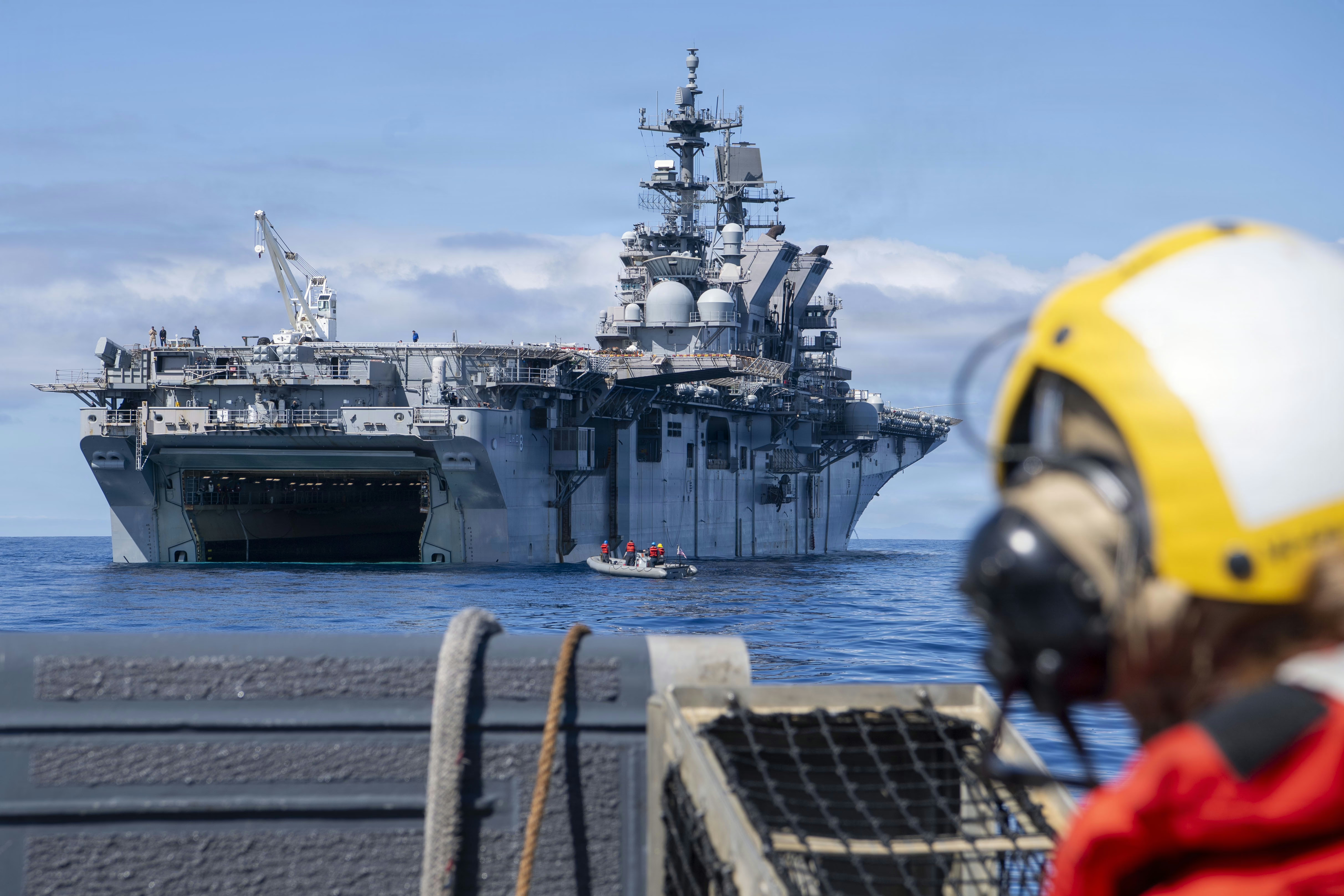
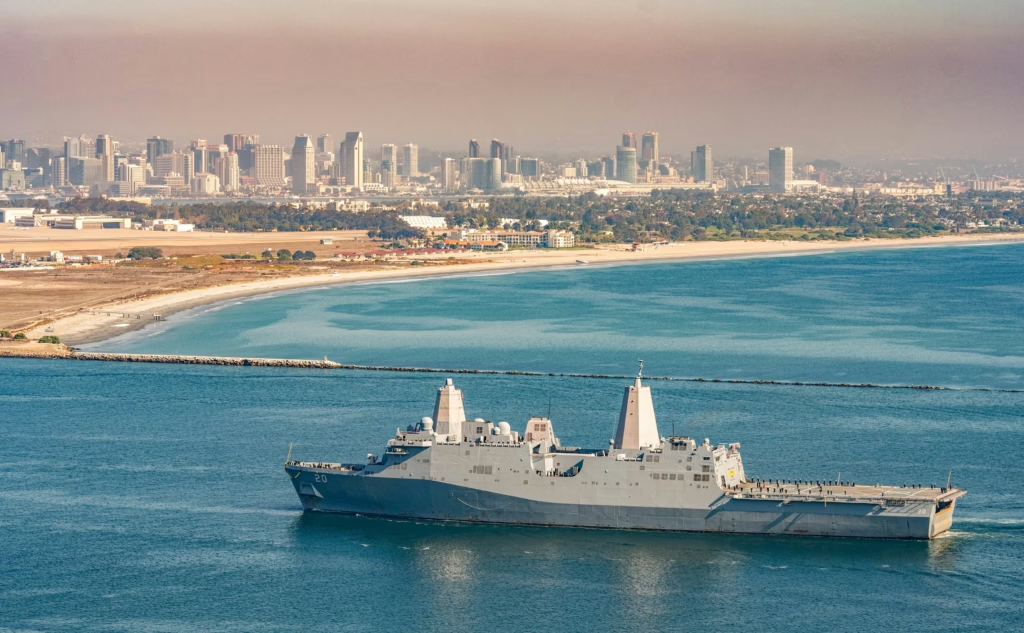

Photo caption: The San Antonio-class amphibious transport dock ship USS Green Bay (LPD 20) arrives in its new homeport of San Diego, Dec. 9, 2024, after nearly a decade forward-deployed to Sasebo, Japan as part of the America Amphibious Ready Group operating in the U.S. Seventh Fleet area of operations. Green Bay was built at HII’s Ingalls Shipbuilding division and commissioned by the U.S. Navy in 2009. (U.S. Navy photo by Chief Mass Communication Specialist Mark D. Faram)
Dec. 20, 2024
HII’s Weekly News Digest is compiled every Friday by the Corporate Communications team to summarize and highlight news stories of significance to the company.
Senate Passes NDAA, Wicker Promises $25 Billion Amendment in 2025: Politico reported on Wednesday that the Senate has passed an $895 billion Pentagon policy bill that sticks to the cap on national defense spending that Republicans and the White House agreed to last year — and is the amount Biden requested in his final budget. The legislation does not include the additional $25 billion sought by incoming Senate Armed Services Committee Chairman Roger Wicker, which would have authorized an additional $1.43 billion for a third Arleigh Burke-class, guided-missile destroyer and supported the construction of a second Virginia-class submarine. Following the 85-14 vote on Wednesday, Wicker said he plans to pursue a defense spending hike in early 2025 when Republicans take leadership of the House, Senate and White House. Regardless, the policy bill passed on Wednesday only authorizes spending, and Congress must pass a full-year appropriations bill to actually allocate funding to the Pentagon. Lawmakers are set to keep government spending on autopilot this week with a stopgap into mid-March, punting how to address the Pentagon budget to President-elect Donald Trump.
Congress Still Undecided On Continuing Resolution as Shutdown Deadline Nears: The Washington Post reported on Friday that House Republicans are set to propose a third funding plan Friday in hopes of averting a government shutdown at midnight after lawmakers rejected a spending and debt bill backed by President-elect Donald Trump the previous evening. As of Friday morning, Speaker Mike Johnson, R-La., had yet to circulate his plan to his GOP conference, but Republicans believe Johnson’s plan will be trimmer than his first two proposals voted on this week. One plan floated overnight called for extending the current fiscal levels until mid-March, a farm bill for one year and $110 billion for natural disasters. It includes details initially agreed to by Democrats. Unlike Thursday’s failed proposal, this version would not raise the debt ceiling, which was an explicit demand from Trump. Another plan floated is just a clean extension, for several weeks into the new year. Meanwhile, Inside Defense reported on Wednesday that the continuing resolution scrapped by Republicans on Wednesday included among a host of other provisions, $14.6 billion in funding for the Columbia– and Virginia-class submarine programs. The bill would allocate $8.8 billion toward Columbia, with $5.9 billion for advance procurement and $2.9 billion for standard procurement work. The amount was nearly $5 billion more than what was sought by the White House Office of Management and Budget. It was unclear Friday morning if the latest plan will include the submarine funding.
Labor Shortages Challenge Shipyards: The Wall Street Journal reported on Thursday that a paradox is playing out at U.S. shipyards: The Navy wants more ships, but shipyards face dire shortages of labor amid rising pay for less demanding fields. Jennifer Boykin, president of HII’s Newport News Shipbuilding division, said the shipyard loses 20% of its hourly craft workers each year to attrition — retirement, quits, dismissals — compared with 10% before the pandemic. To help alleviate the challenge, the Navy, HII and General Dynamics have developed a “Shipyard Accountability and Workforce Support” initiative under which already appropriated funds would be frontloaded to boost worker pay immediately. With that proposal’s fate still in the air, HII is taking steps to increase throughout. The company is adding suppliers, and CEO Chris Kastner said he is enthusiastic about the potential of additive manufacturing to produce bespoke components in a fraction of the time and cost of traditional manufacturing.
| Social Media Highlight Of The Week
Posted Monday on HII’s Facebook page:
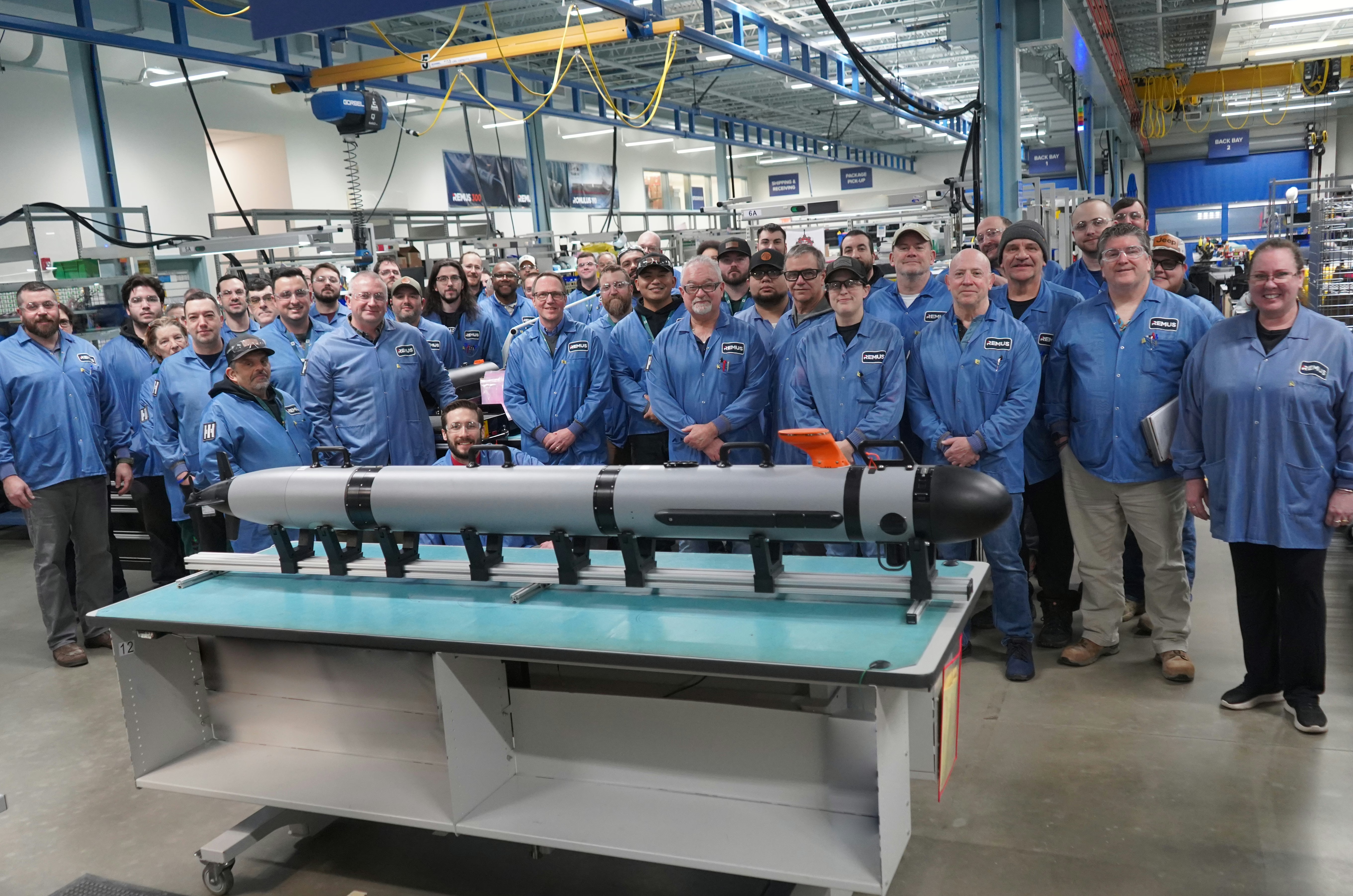
“Discover how the REMUS uncrewed underwater vehicle (UUV) revolutionizes undersea operations! With more than 600 REMUS UUVs operating in more than 30 countries, this platform has proven its reliability. Ninety percent of the REMUS vehicles delivered over the past 23 years remain operational today. Join Duane Fotheringham of HII and Carl Hartsfield of the Woods Hole Oceanographic Institution (WHOI) on the CavasShips podcast to learn why it is the most trusted UUV in global service. Listen now at Defense & Aerospace Report ” |
Second Frigate Yard Could Be Selected in Fiscal Year 2027: USNI News reported on Friday, Dec. 19, that the design for the Navy’s Constellation-class frigate program should be mature enough for the shipbuilder to enter continuous production by May. Completion of the design clears the way for the Navy to tap a second yard to build more hulls as early as fiscal year 2027, a spokesperson for Navy assistant secretary for research, development and acquisition Nickolas Guertin said. The frigate program has faced delays due to challenges in design modifications and production. Shipbuilder Fincantieri Marinette Marine was set to deliver the first frigate – Constellation (FFG-62) – in 2026, but now the delivery could be three years later. In November, the Navy issued a request for information to industry to find out what companies could build additional frigates. Six shipbuilders responded to the RFI, according to Guertin’s spokesperson. The Navy hosted an industry day earlier this month with those companies and plans to update the RFI based on the information it received.
Navy Halts Landing Ship Medium Program: USNI News reported on Tuesday that the development of a new landing ship key to the Marines Corps’ island-hopping strategy in the Western Pacific is on hold due to Navy concerns over cost. The Navy put the project out for bid and received more expensive responses than it had anticipated, Assistant Secretary of the Navy for research, development and acquisition Nickolas Guertin said at an American Society of Naval Engineers symposium last week. For now, to quickly get the Marines a ship that can move them around the region, the Navy plans to buy a “non-developmental vessel” while it works on the requirements, Lt. Col. Eric Flanagan said. The Congressional Budget Office projected the lead ship in the class costing anywhere from $460 to $560 million, according to an April report. If the Navy buys the 18 to 35 ships according to current plans, each hull could cost $340 to $430 million. Initial plans in 2020 called for each ship to cost $100 to $150 million.
HII’s Weekly News Digest is produced by HII’s Corporate Communications team and posted to Homeport every Friday.
Please note: Social media is blocked on HII computers for most employees. Employees are encouraged to visit HII’s Facebook page and other social media sites on personal time and from non-work devices.
Send feedback to: HII_Communications@hii-co.com.