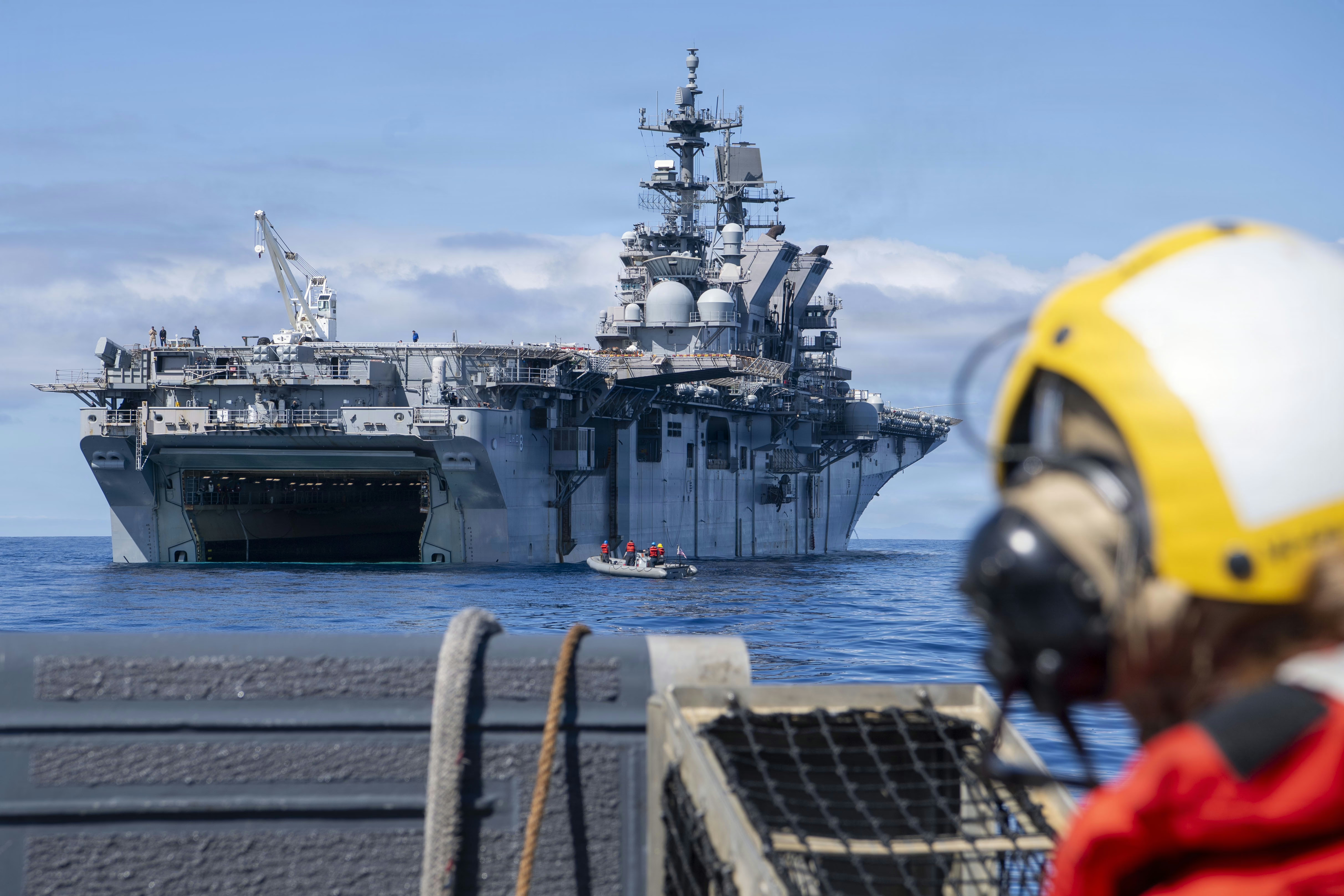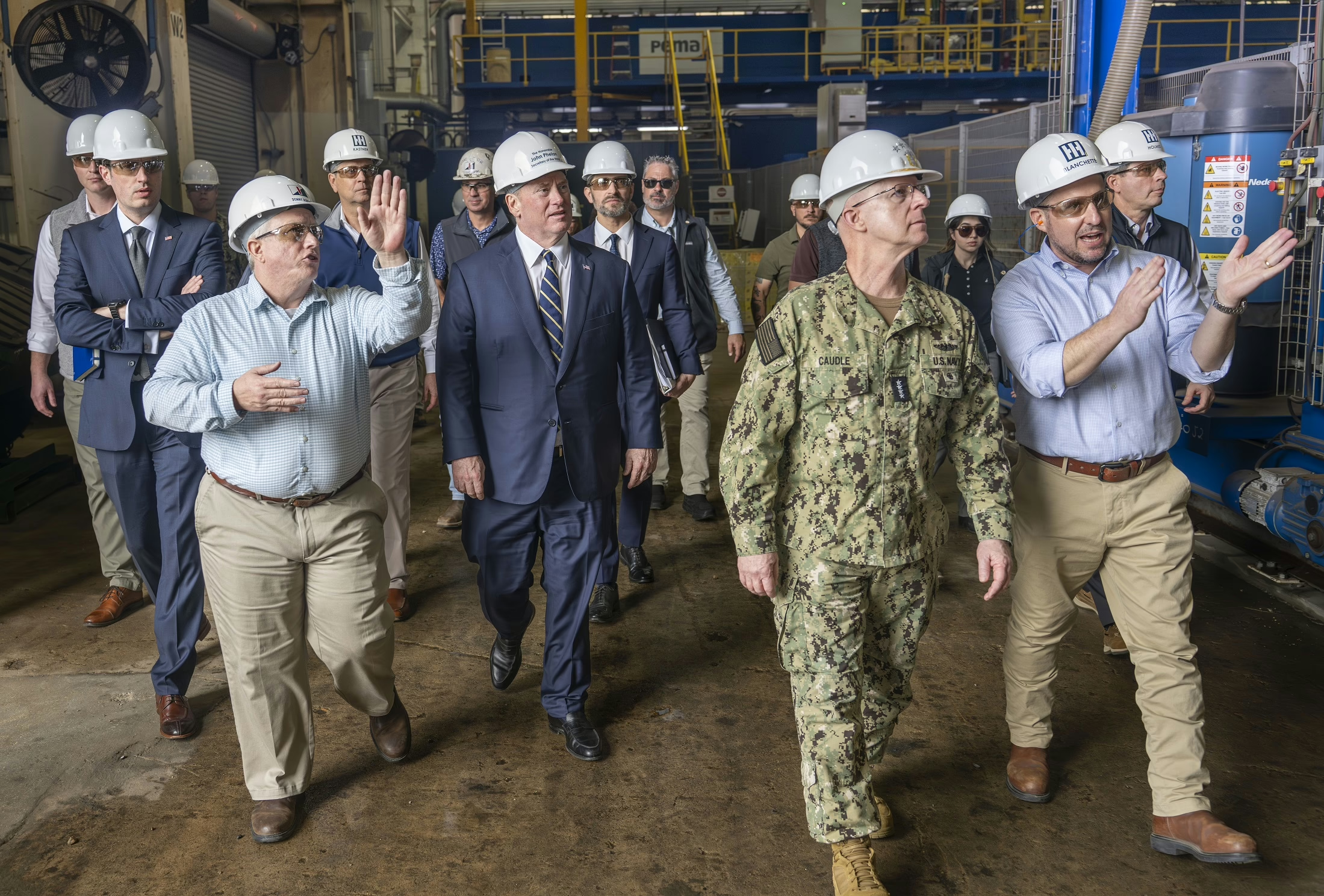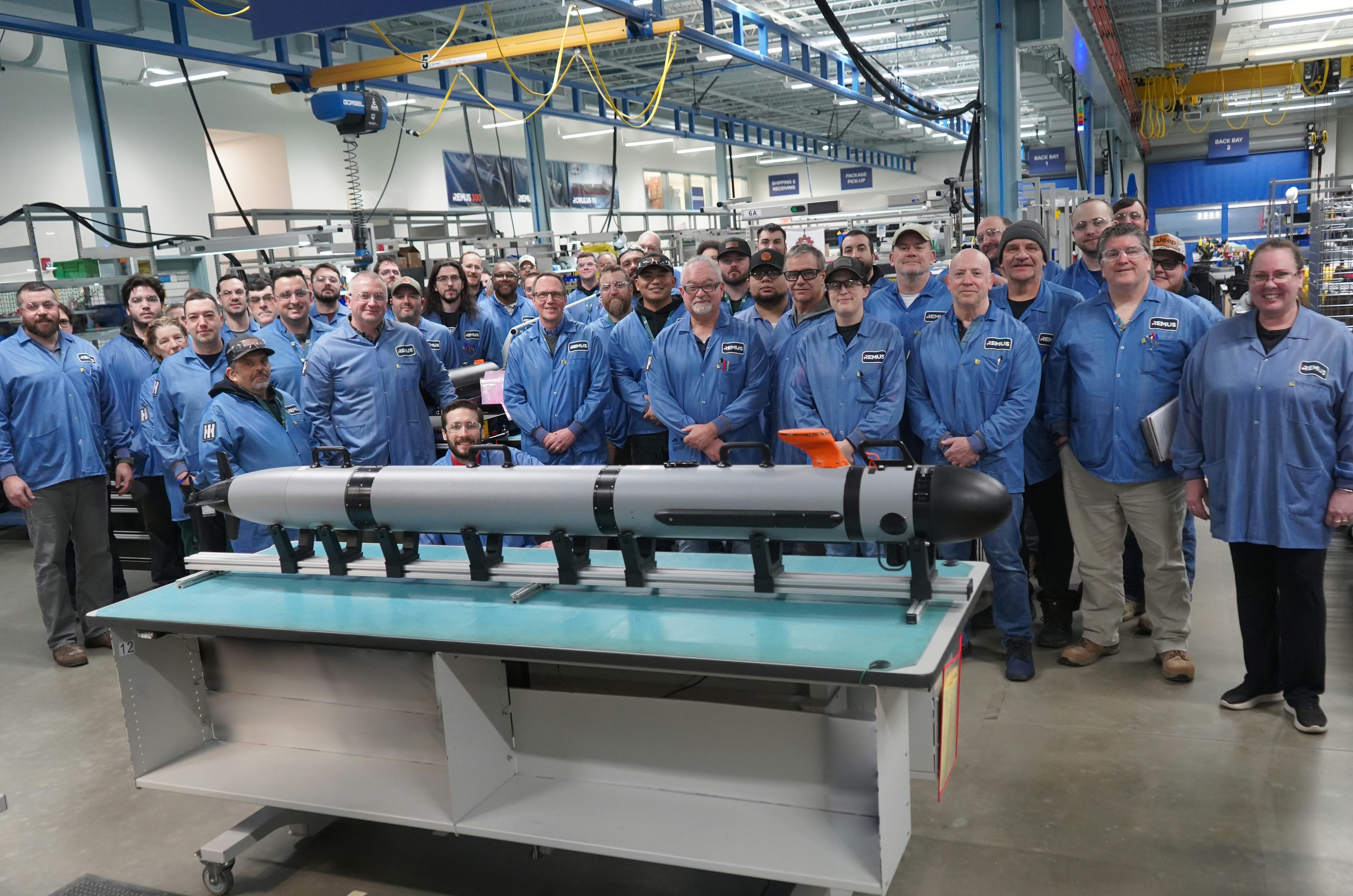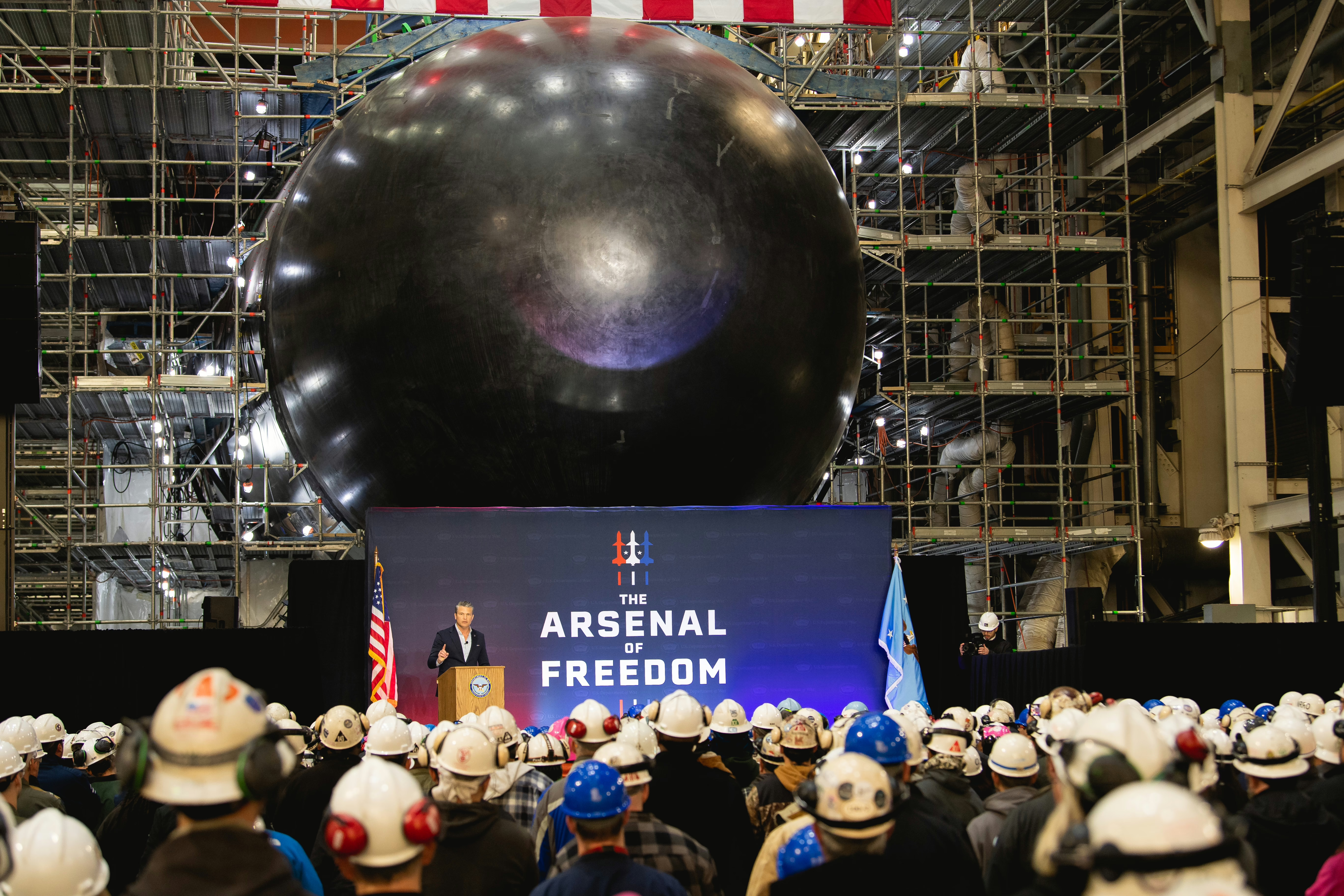


Photo caption: PACIFIC OCEAN (Aug. 11, 2025) – U.S. Navy Aviation Boatswain’s Mate (Handling) 1st Class Anna Perez, from Fardel, Minn., prepares to launch an F/A-18F Super Hornet, assigned to the “Flying Eagles” of Strike Fighter Squadron (VFA) 122, off the flight deck of the Nimitz-class aircraft carrier USS Theodore Roosevelt (CVN 71), Aug. 11, 2025. Theodore Roosevelt, flagship of Carrier Strike Group (CSG) 9, is underway conducting exercises to bolster strike group readiness and capability in the U.S. 3rd Fleet area of operations. (U.S. Navy photo by Mass Communication Specialist 3rd Class Aaron Haro Gonzalez)
Aug. 15, 2025
HII’s Weekly News Digest is compiled every Friday by the Corporate Communications team to summarize and highlight news stories of significance to the company.
Navy Housing Proposal Would Create 750 Units, Retail And Parking In Downtown Newport News: The Daily Press reported on Wednesday that the Navy has made public plans to build 750 housing units and 10,000 square feet of retail space and more than 1,000 parking spaces on land near HII’s Newport News Shipbuilding division. The $400 million project would replace existing buildings, including the Navy’s housing and recreation center Huntington Hall and the city-owned Julius Conn Gym. The development will span several blocks between Warwick Boulevard, Huntington Avenue and 29th and 32nd streets, and will be built in two phases. On Tuesday, Newport News City Council approved a rezoning request and allocated $5.5 million to support downtown initiatives to support the development. Earlier this year, the city approved measures related to a separate 3,000-space, six-level parking garage for NNS workers and sailors assigned to the shipyard. It will be built at 38th Street and Huntington Avenue.
Navy Reels In Lead Design Role For SSN(X), DDG(X) Ships: USNI News reported on Tuesday that Naval Sea Systems Command wants to bring the task of leading the design of the next generation of destroyers and attack submarines back to the Navy. NAVSEA and its chief engineer Rear Adm. Pete Small are bolstering a group of government naval architects, engineers and draftsmen to shape the planned next-generation DDG(X) destroyer and SSN(X) attack submarine that are set to enter service in the 2030s. DDG(X) is set to marry the existing combat system and sensors from the Arleigh Burke with a new ship hull that would provide growth margins for power and cooling for new weapons and sensors. SSN(X) is a return to a more aggressive blue water combatant that shares similarities with the three-boat Sea Wolf-class submarines that were built for hunting Soviet boats in the open ocean. NAVSEA is working with the Maritime Industrial Base to develop additional naval architects and engineers for design.
Navy Proposes West Coast Dry Dock To Support Modern Ships and Submarines: Stars and Stripes reported on Friday, Aug. 8, that the U.S. Navy is seeking the public’s input on plans to build a new dry dock at Puget Sound Naval Shipyard that can accommodate the service’s largest aircraft carriers and nuclear-powered submarines over the next century. The shipyard has the only dry dock along the Pacific Ocean that can be used to repair Nimitz-class aircraft carriers and several classes of nuclear-powered submarines. But the new Gerald R. Ford-class carriers are too large for the existing dry dock. The facility also needs triple the amount of electricity to meet the needs of Ford-class carriers. The Navy now has only one shipyard in Norfolk, Virginia, that is capable of handling Ford-class carriers. The Navy announced in May that Kitsap would be the homeport of John F. Kennedy (CVN 79) after it is commissioned. The Navy recently began work on electric upgrades at a pier at Bremerton to upgrade its power supply to support John F. Kennedy when it arrives. The deadline for the public to submit comments is Sept. 3. A final decision on whether to move ahead with the upgrades is scheduled to be announced in the summer 2026.
Industry Lines Up To Support Golden Dome: Reuters reported on Tuesday that the Trump administration’s flagship Golden Dome missile defense system will include four layers — one satellite-based and three on land — with 11 short-range batteries located across the continental U.S., Alaska and Hawaii, according to a U.S. government slide presentation on the project. The slides, tagged “Go Fast, Think Big!” were presented to 3,000 defense contractors in Huntsville, Alabama, last week and reveal the unprecedented complexity of the system, which faces an ambitious 2028 deadline. Breaking Defense reported on Friday, Aug. 8, that large defense contractors appear to be making a play for leadership or integrator for the sprawling project, which already has $25 billion set aside as down payment in the recently passed reconciliation package, while other firms are highlighting specific capabilities they can bring to bear. Their enthusiasm for the project comes as defense officials were told not to discuss the project at last week’s Space and Missile Defense Symposium in Huntsville, Alabama. Meanwhile, Axios reported on Wednesday that Tom Karako, a missile-defense expert at the Center for Strategic and International Studies, predicts the administration’s silence on Golden Dome is temporary and that discussions will create consensus and shared understanding of how industry can play a role in the project’s development.
| Social Media Highlight Of The Week
Posted Thursday to HII’s LinkedIn page:
“See IONIC in action at AFCEA International TechNetAugusta. Developed by HII subsidiary Enlighten, IONIC is a modern data lake house architecture that simplifies data management and empowers data-driven decision-making across all domains. IONIC ingests, stores, analyzes, and visualizes data at DoD mission scale—delivering the speed, clarity, and insight needed to fuel decision advantage. 📍 Meet us at Booth 621 | Meeting Room ODS17 📅 Aug. 18–21 | Augusta, GA 🔗 Learn more: https://ionicdata.com/” |

US Steel Facility Continues To Operate Following Explosion: The Wall Street Journal reported on Tuesday that operations will continue, albeit at a limited capacity, at U.S. Steel’s Mon Valley Works — Clairton Plant, which is also known as Clairton Coke Works. An explosion at the plant on Monday killed two people and injured 10 others. The facility located 15 miles south of Pittsburgh, Pennsylvania, is the largest coke manufacturing facility in the United States, employing about 1,300 workers. CBS News reported on Tuesday that the facility normally operates 10 coke oven batteries, which produce about 4.3 million tons of coke a year. The Clairton plant bakes coal into a pure carbon form, which is then used in U.S. Steel’s blast furnaces where iron ore is used to make steel. The Wall Street Journal reported on Wednesday that the explosion knocked out two batteries, and two more near the blast area were temporarily taken down for repairs. Clairton Coke Works is owned by U.S. Steel, a subsidiary of Nippon Steel. Nippon Steel, Japan’s biggest steelmaker, closed its $14.9 billion acquisition of U.S. Steel in June after an 18-month negotiation to obtain U.S. government approval for the deal, which faced scrutiny due to national security concerns. Nippon Steel pledged $2.2 billion for upgrades at Mon Valley by 2028, though the to-do list didn’t include repairs to Clairton’s coke ovens.
HII’s Weekly News Digest is produced by HII’s Corporate Communications team and posted to MyHII every Friday.
Please note: Social media is blocked on HII computers for most employees. Employees are encouraged to visit HII’s Facebook page and other social media sites on personal time and from non-work devices.
Send feedback to: HII_Communications@hii-co.com.